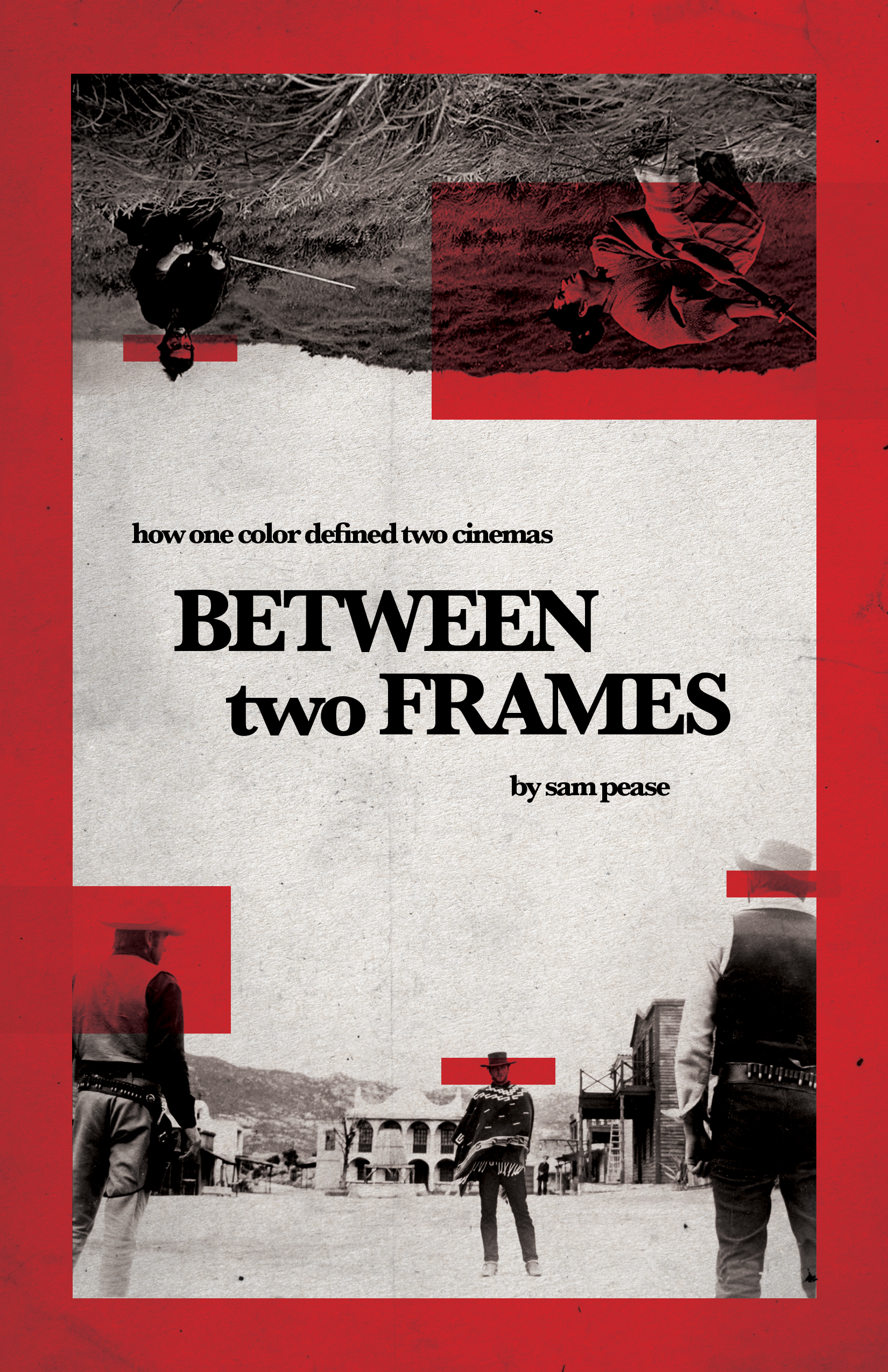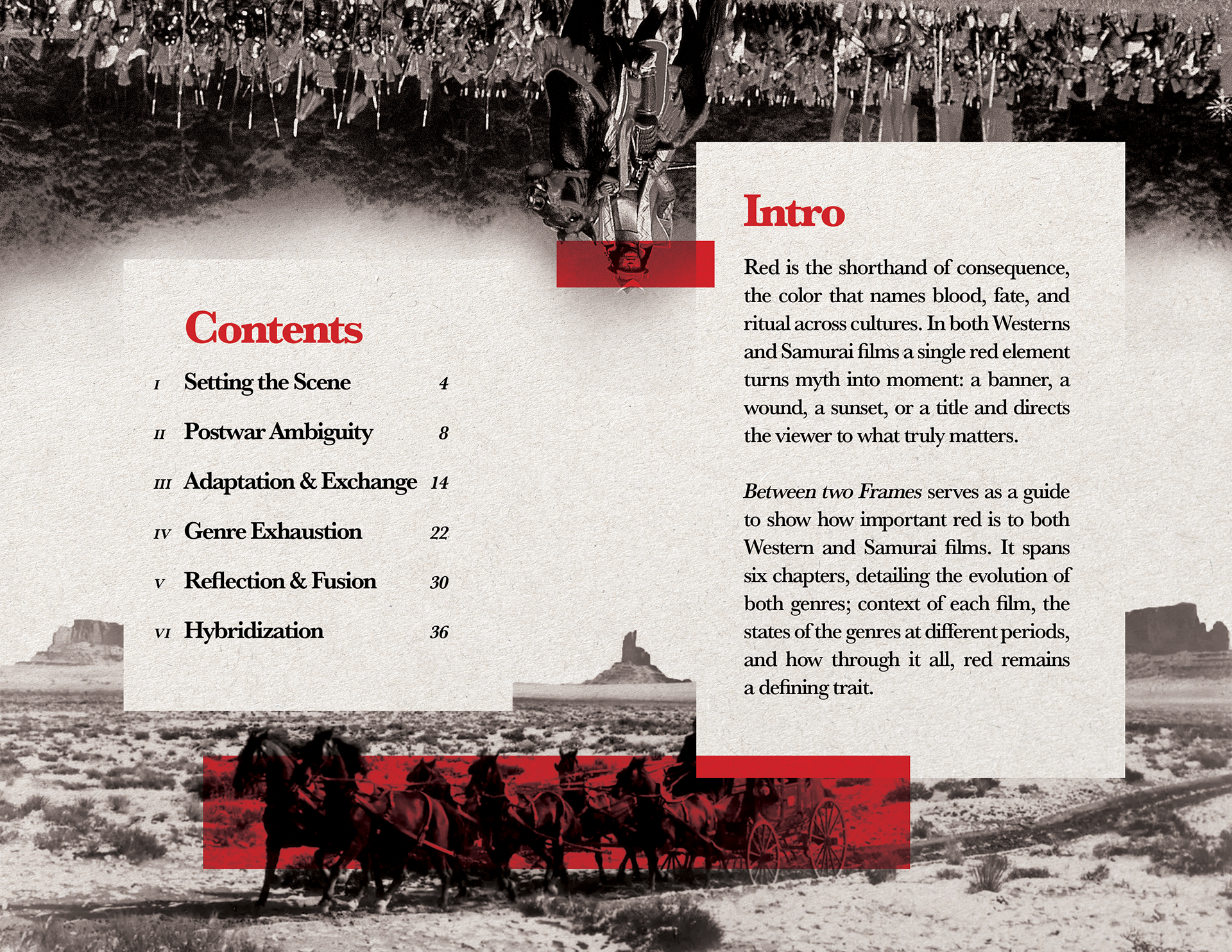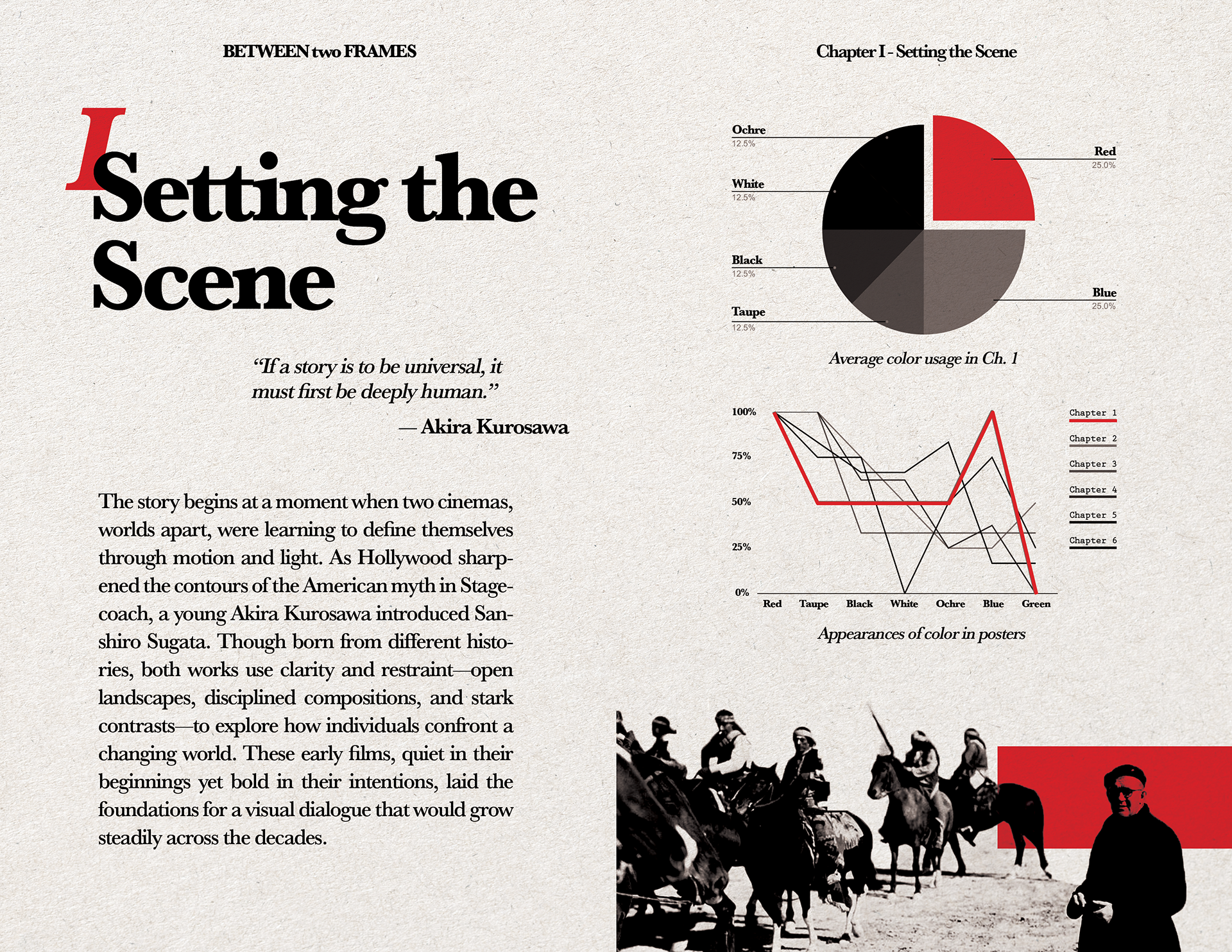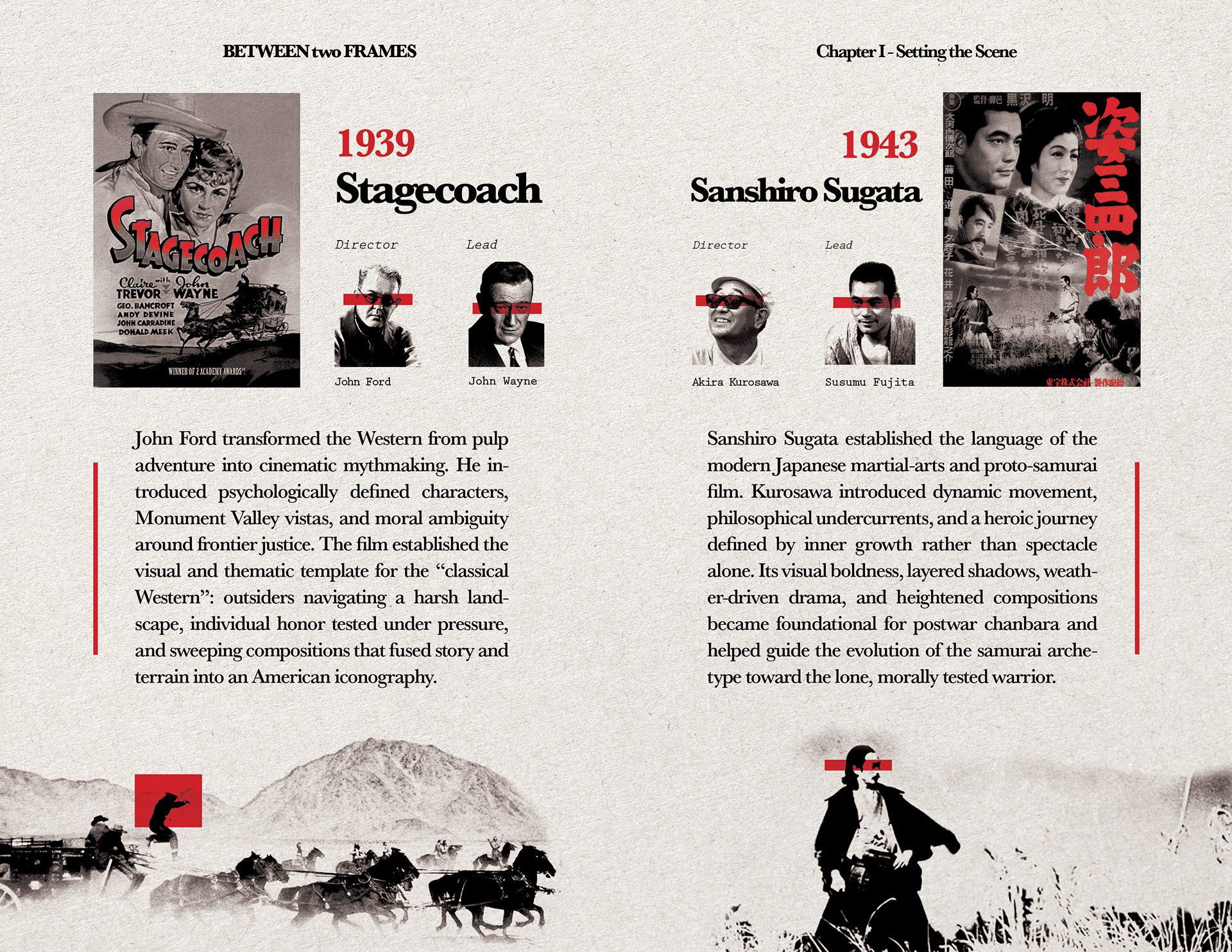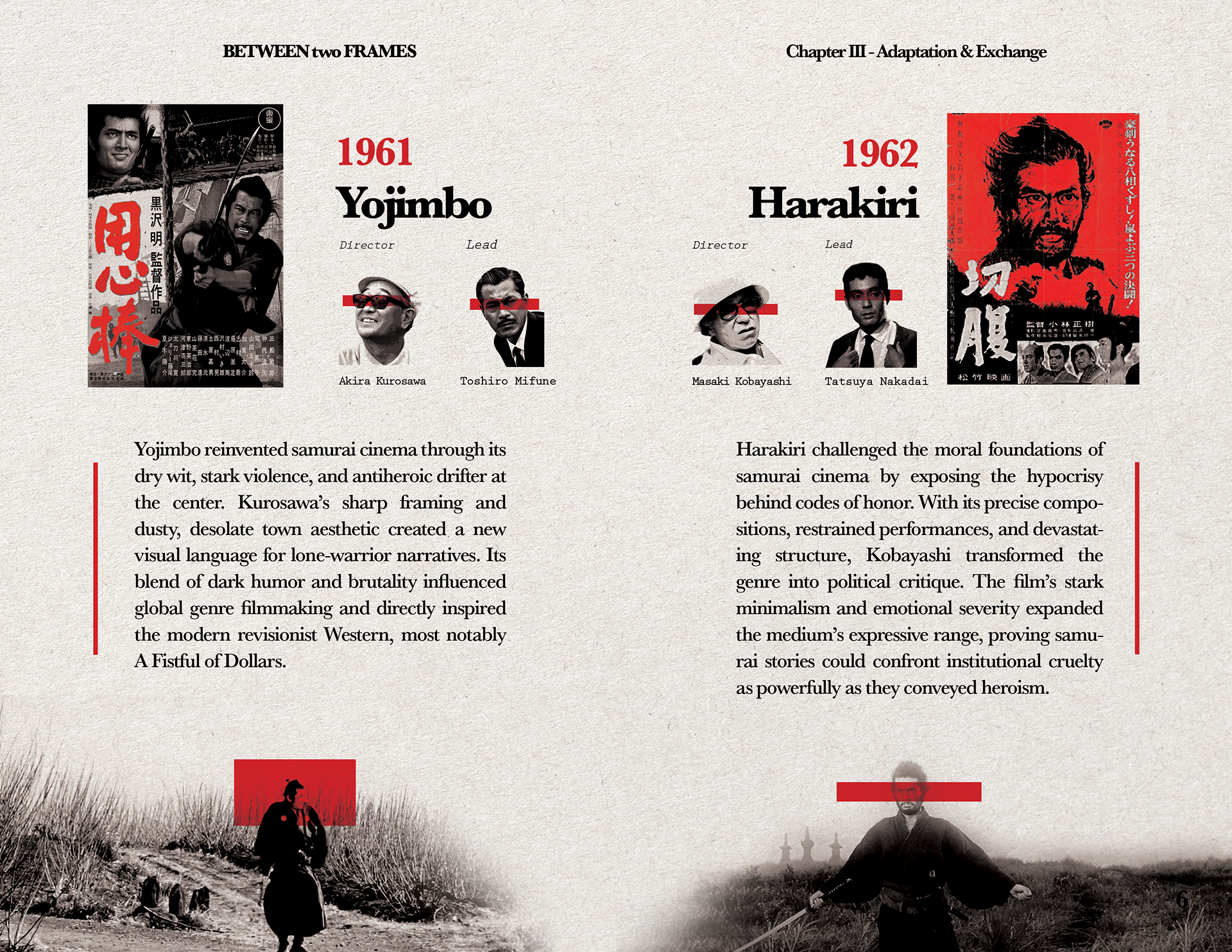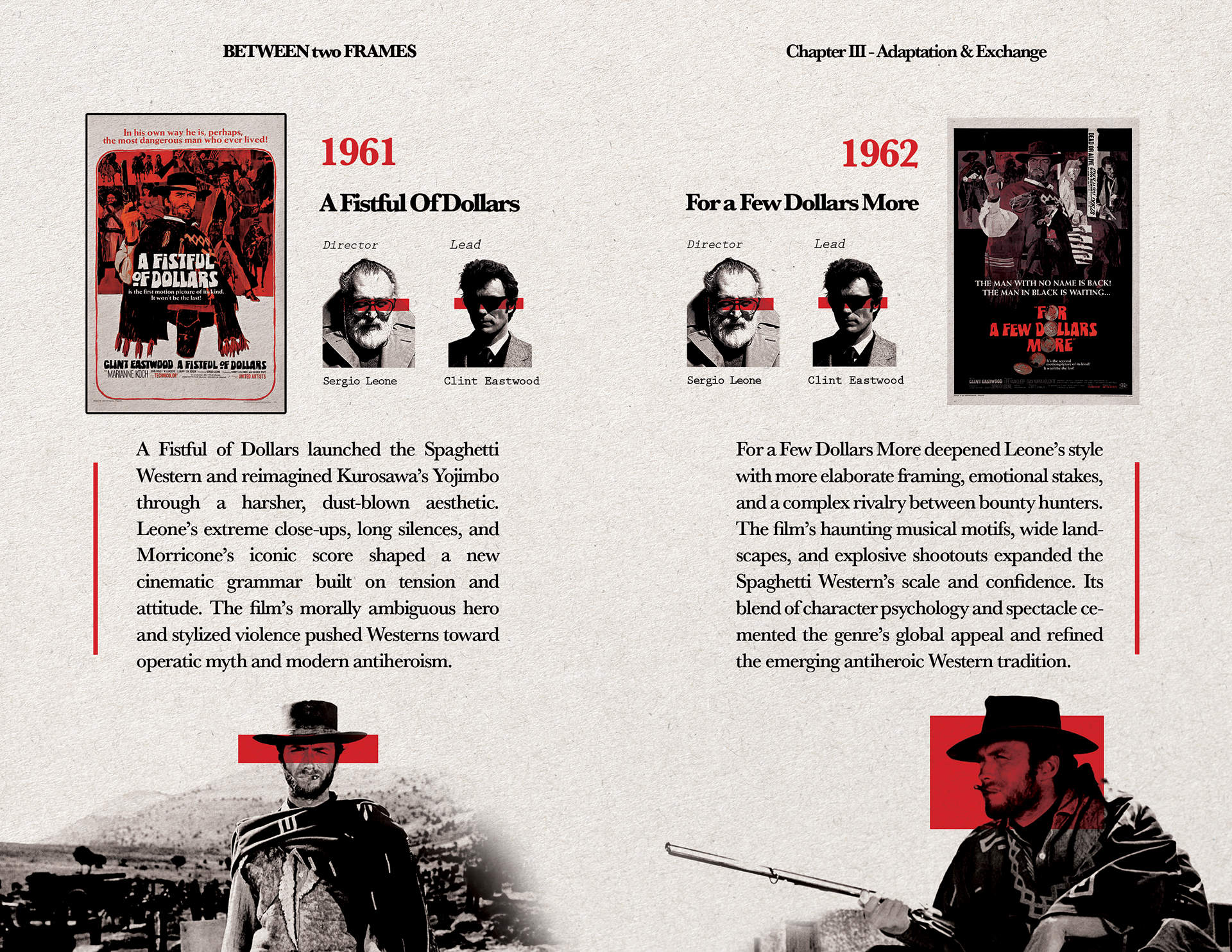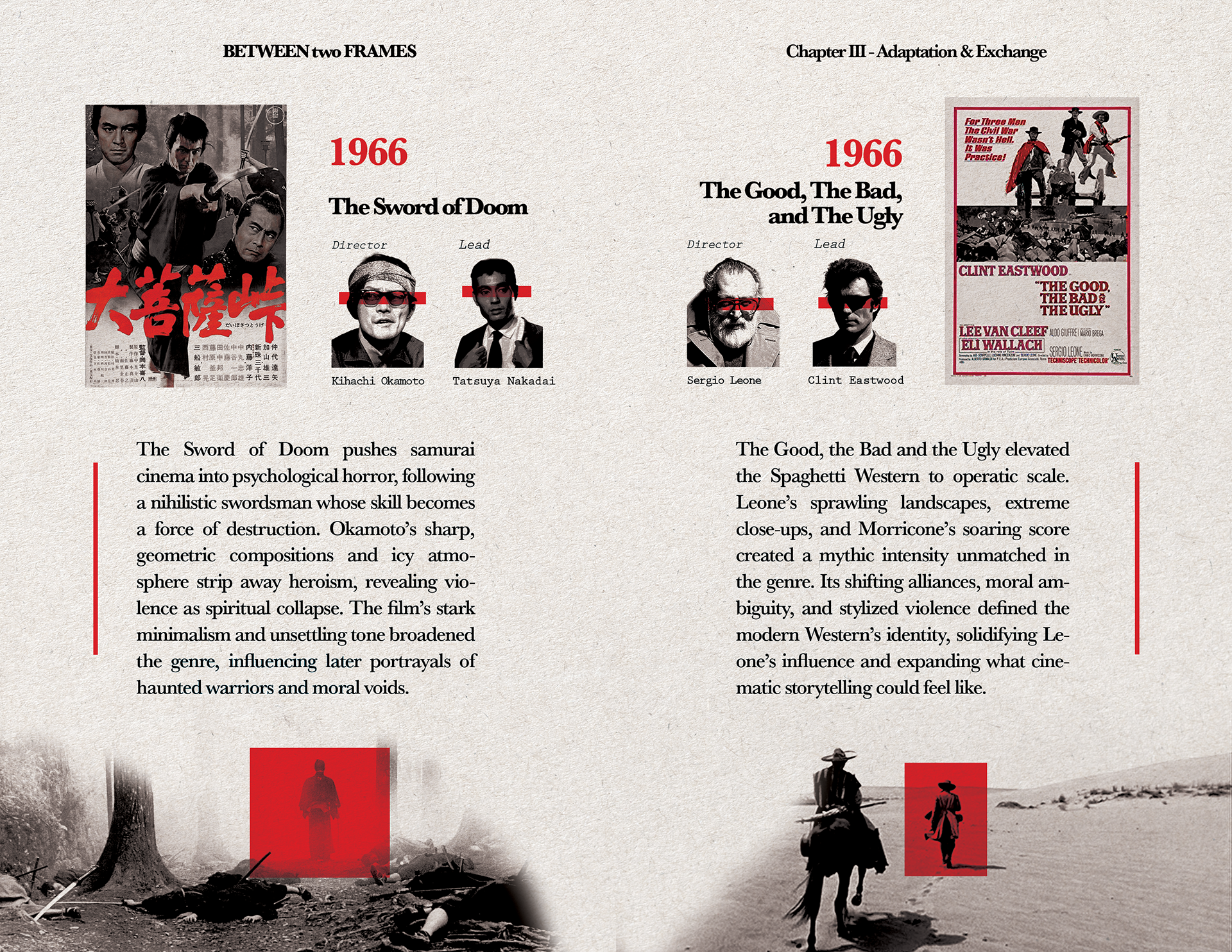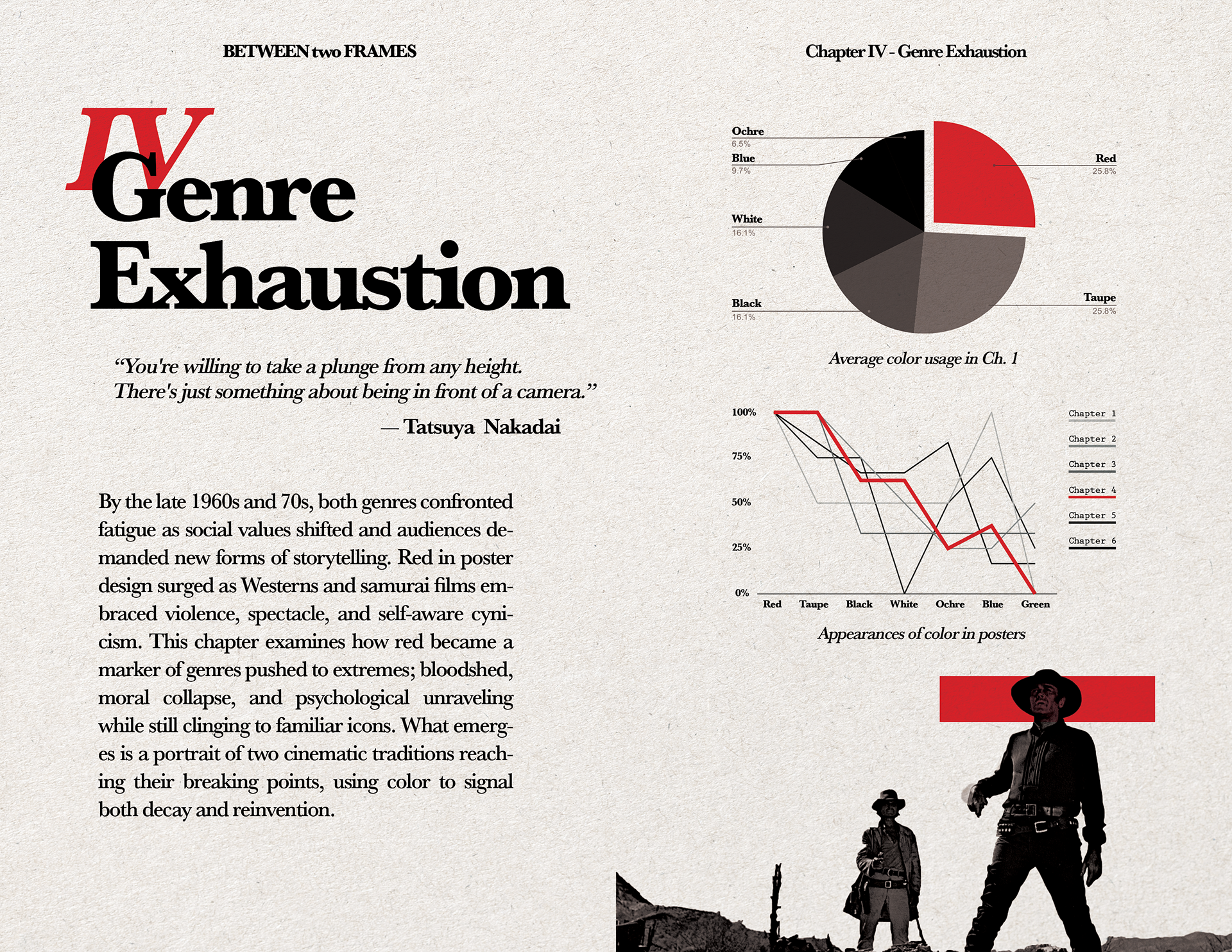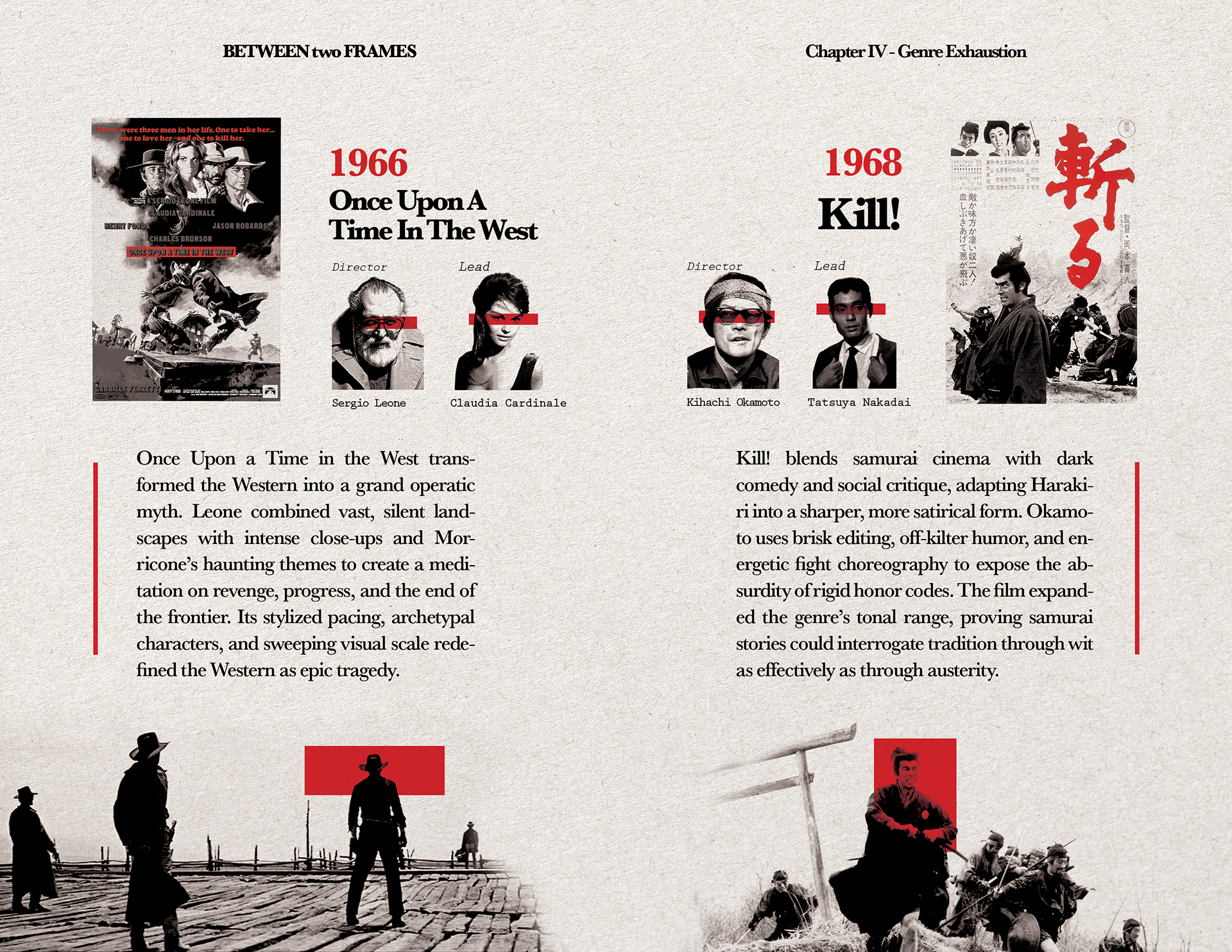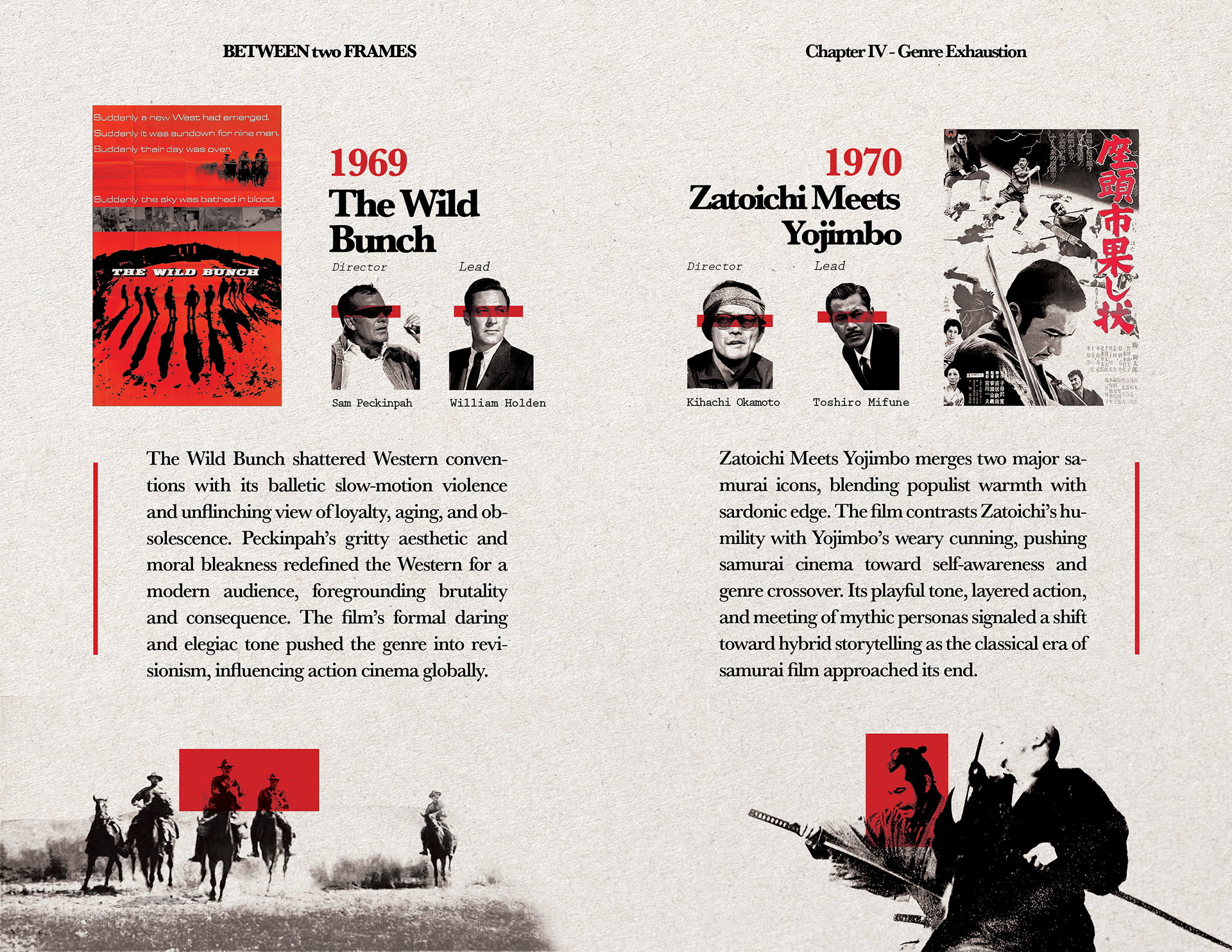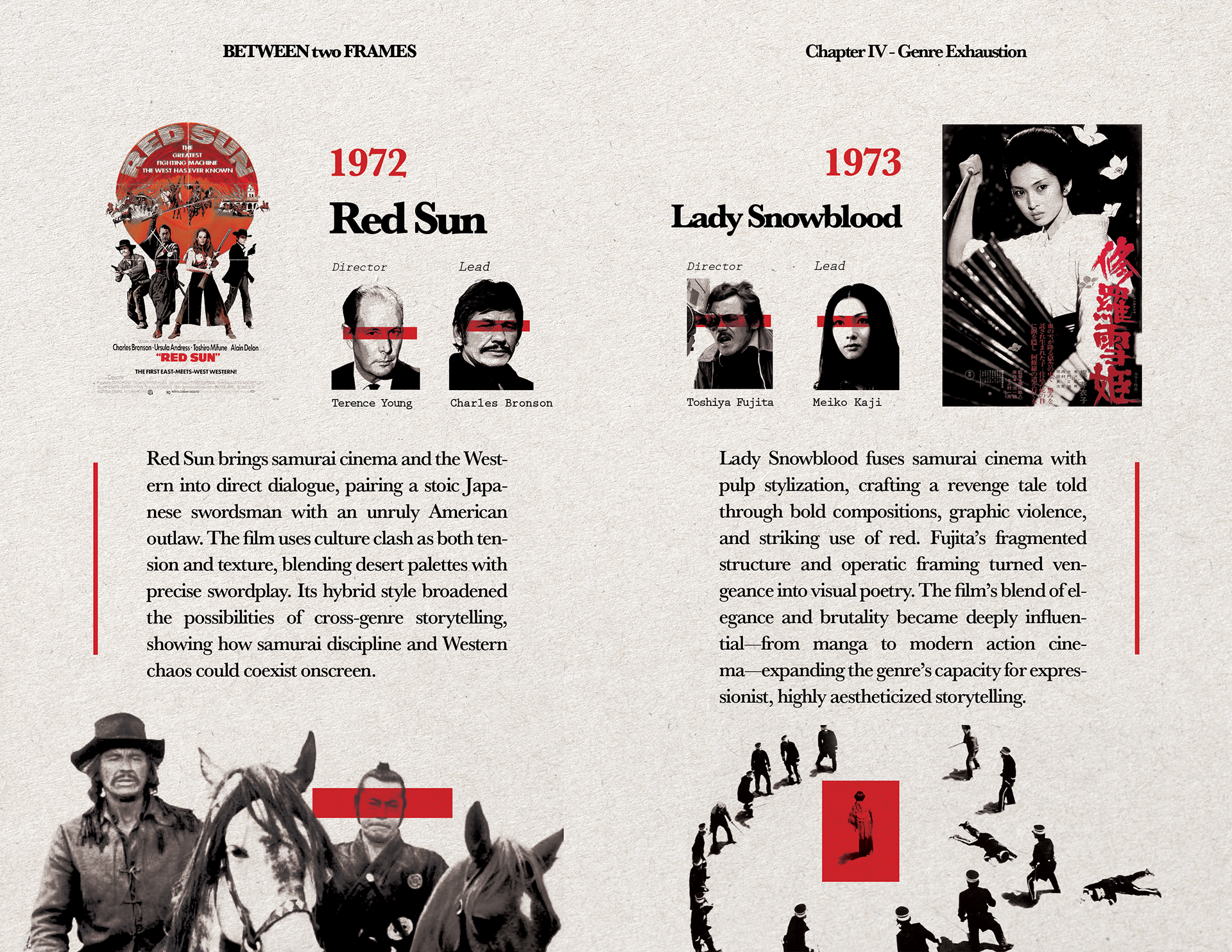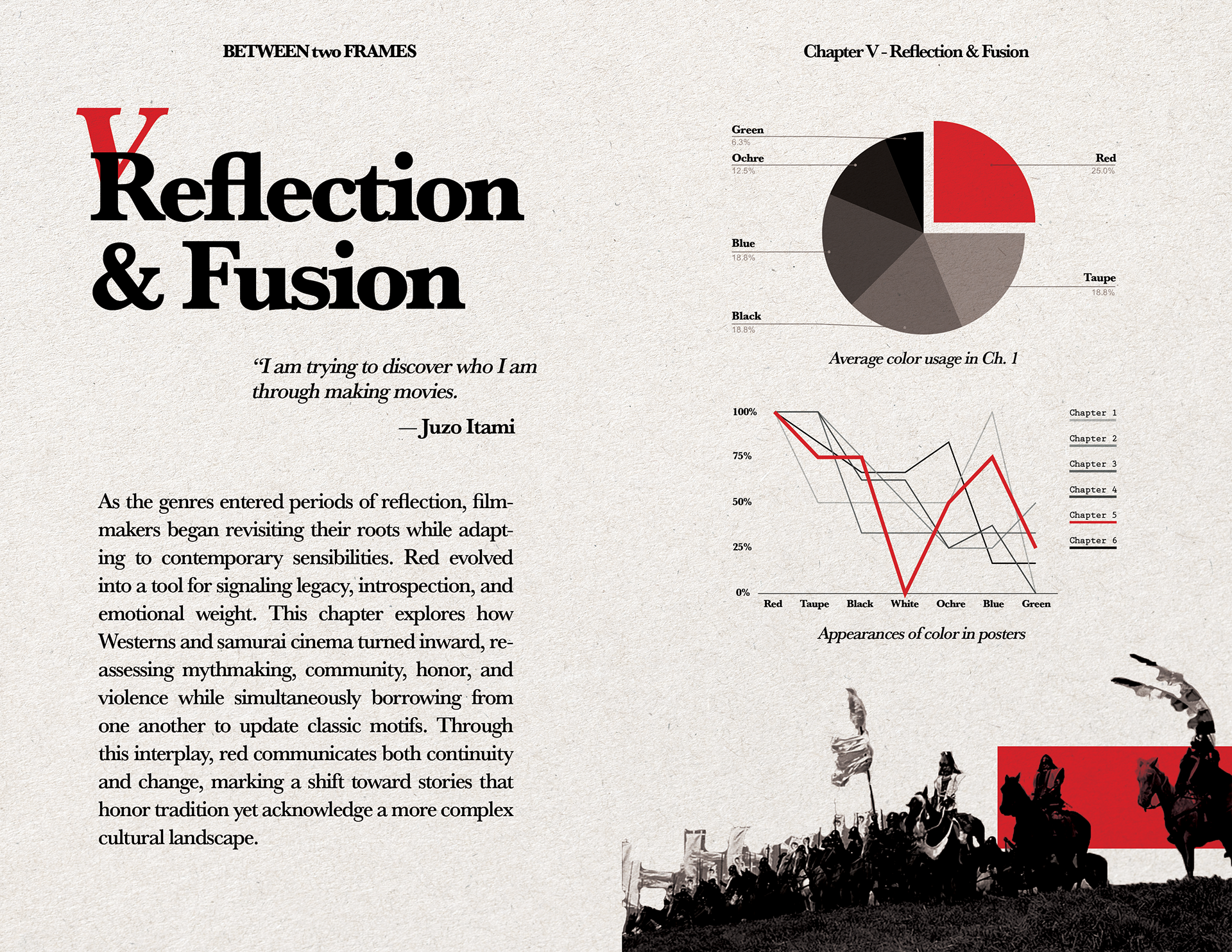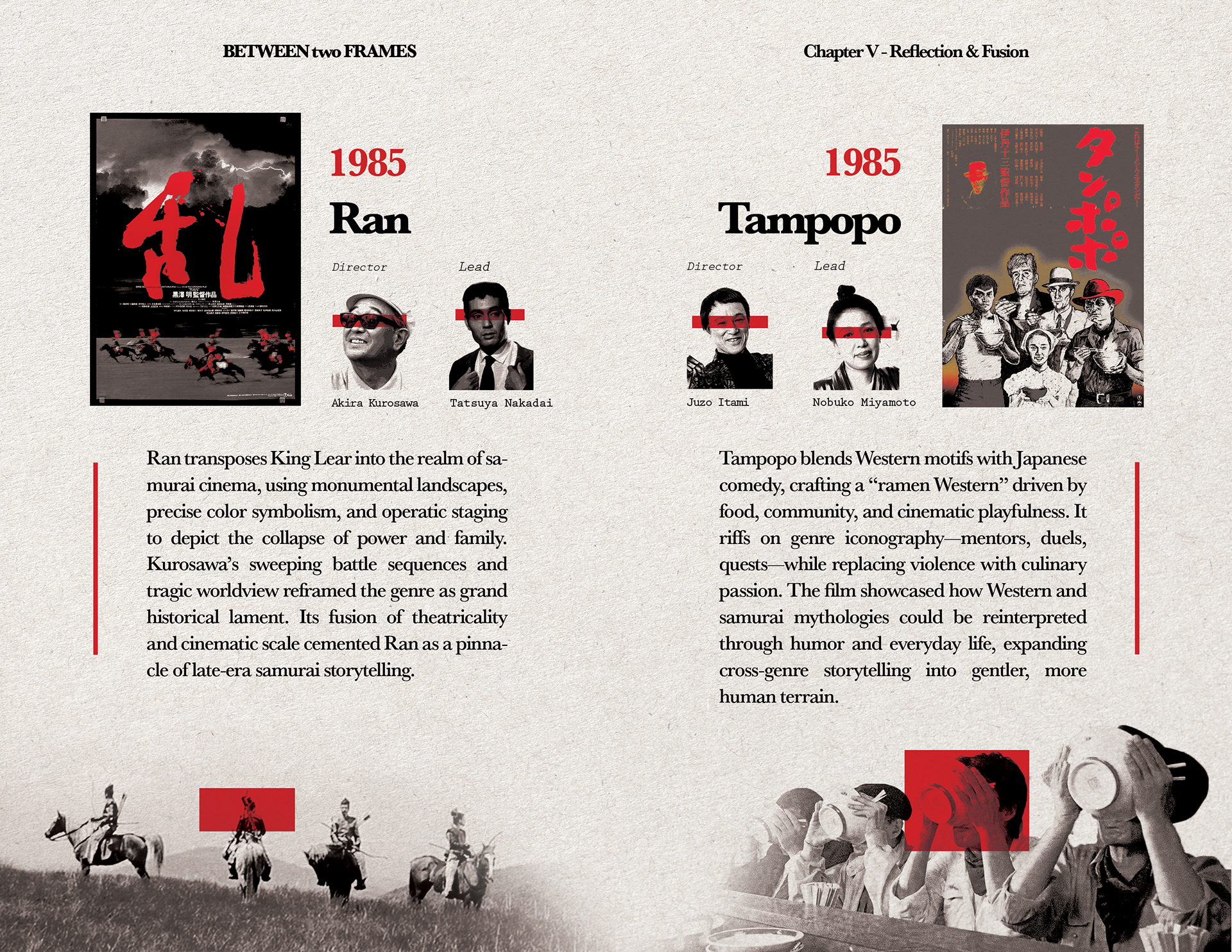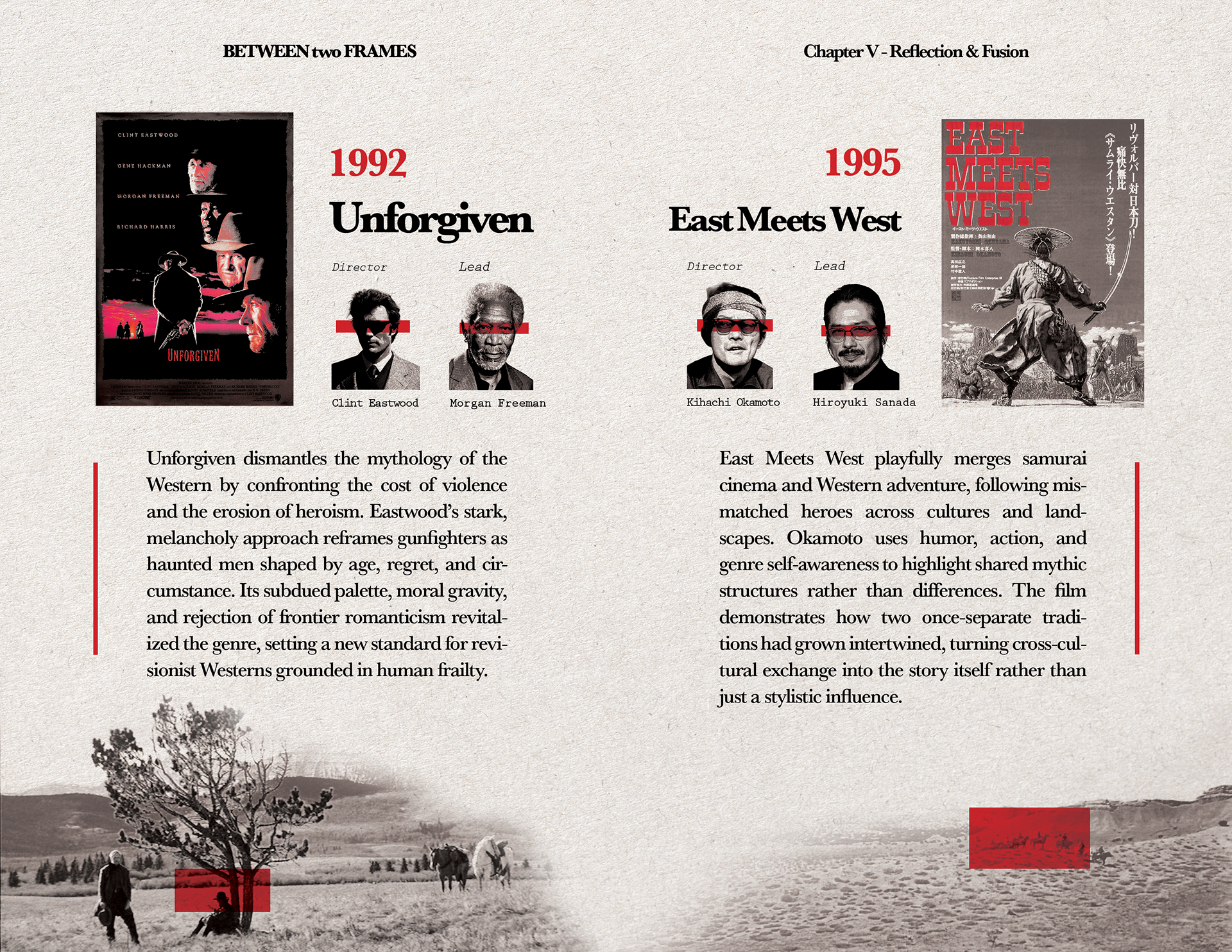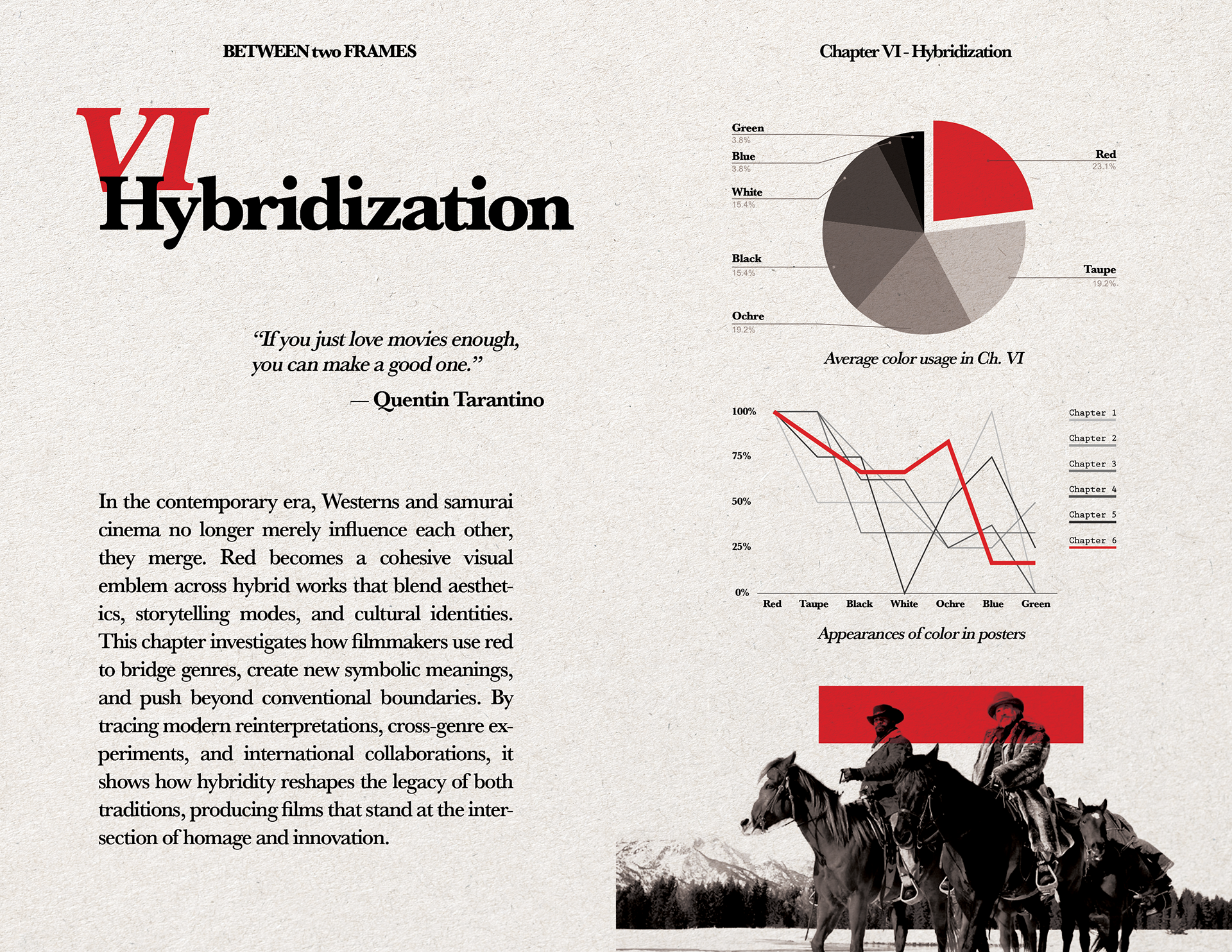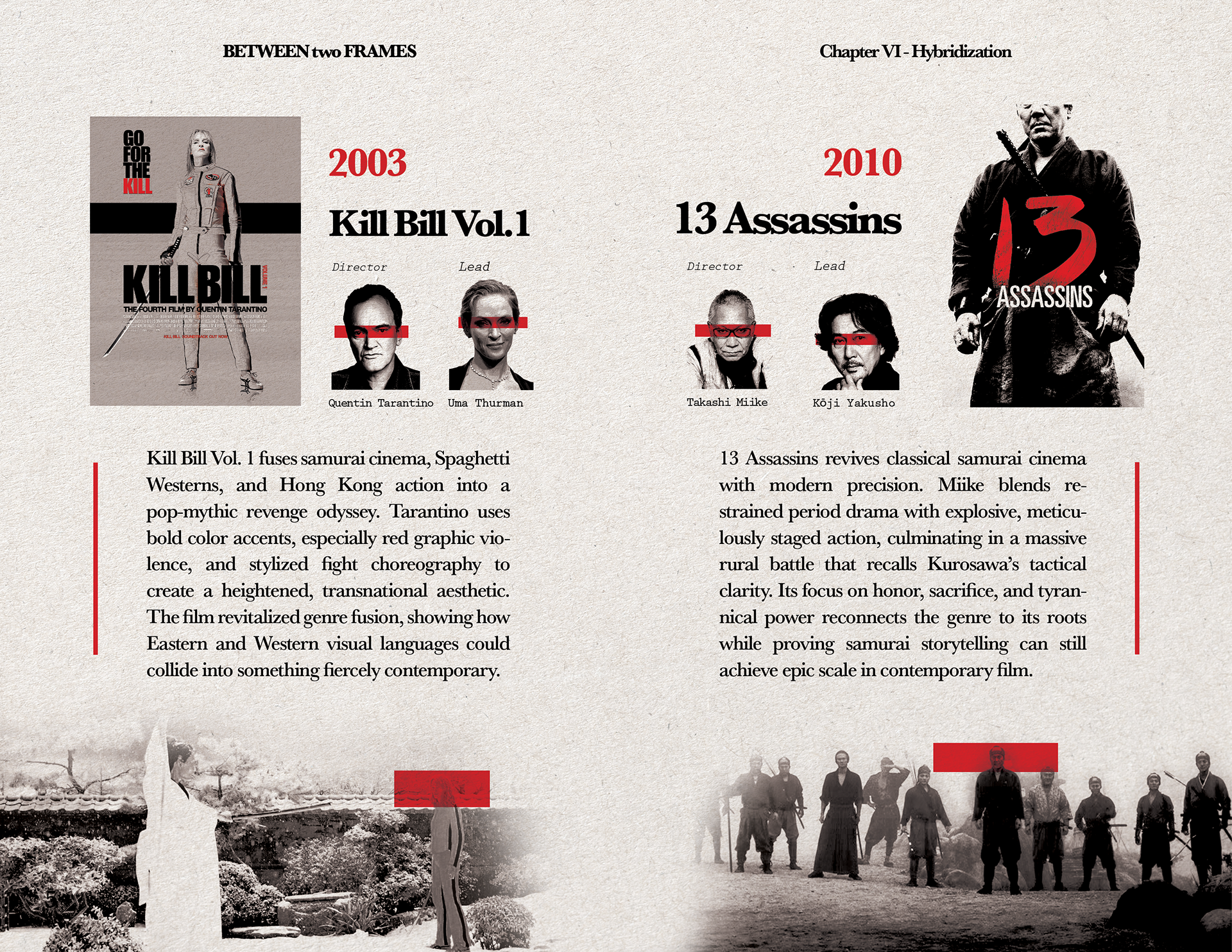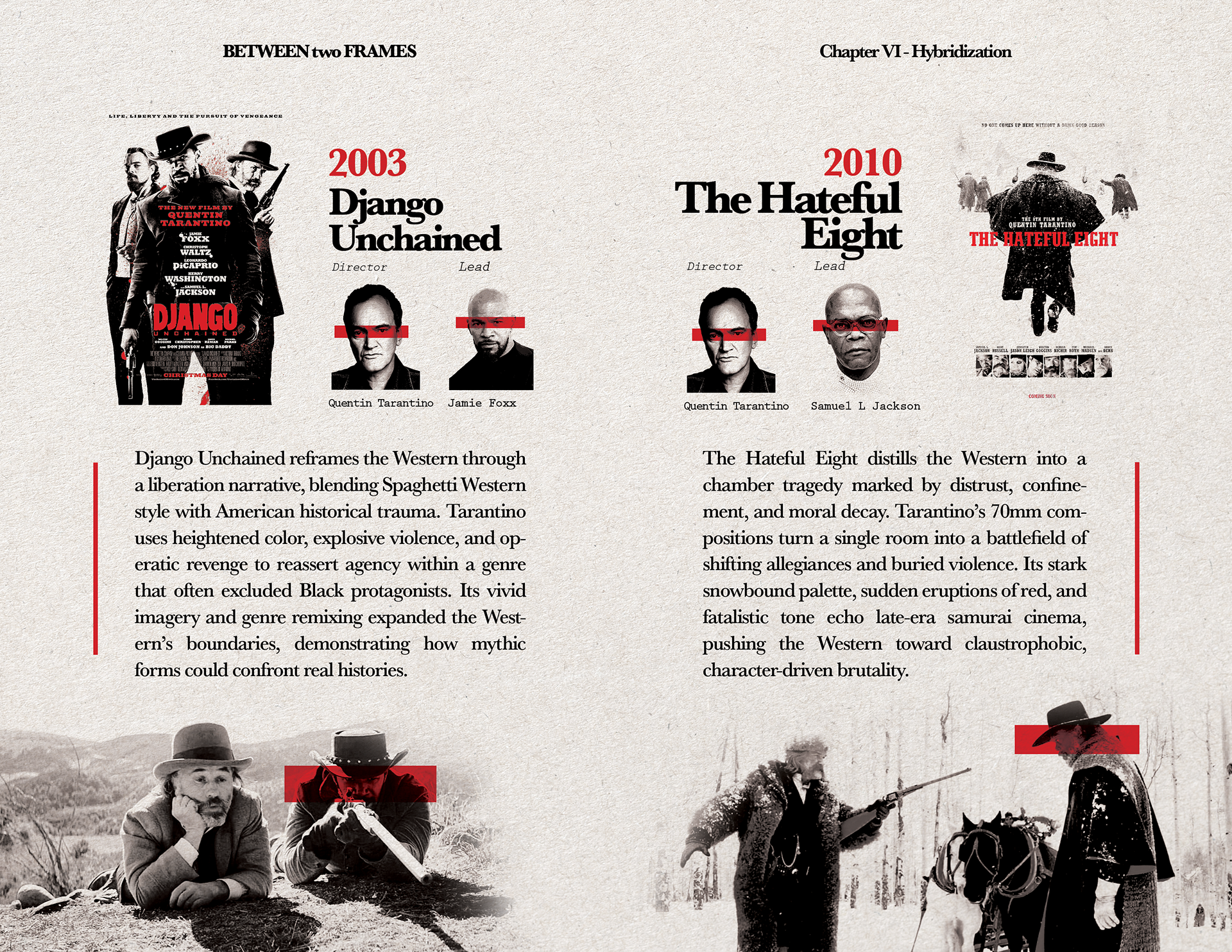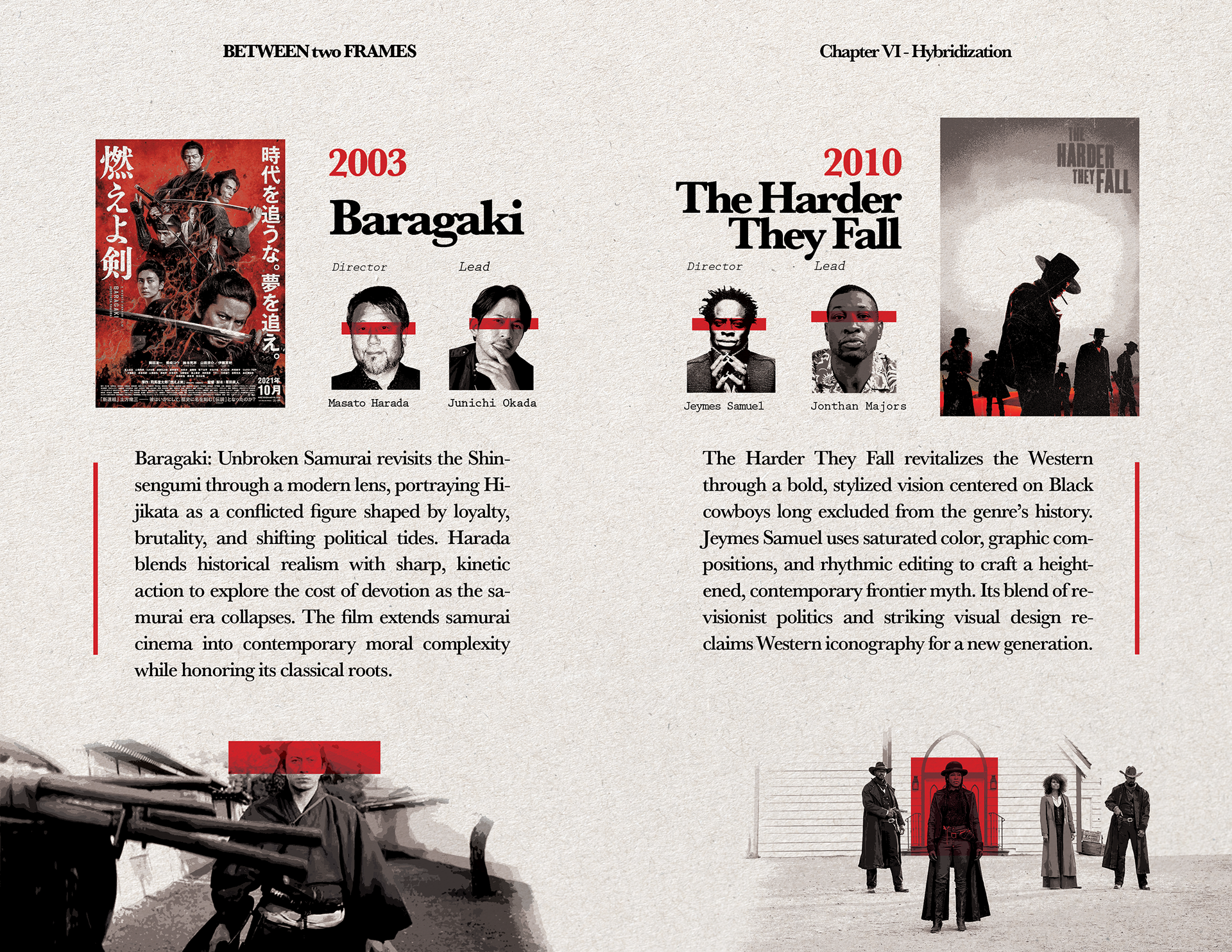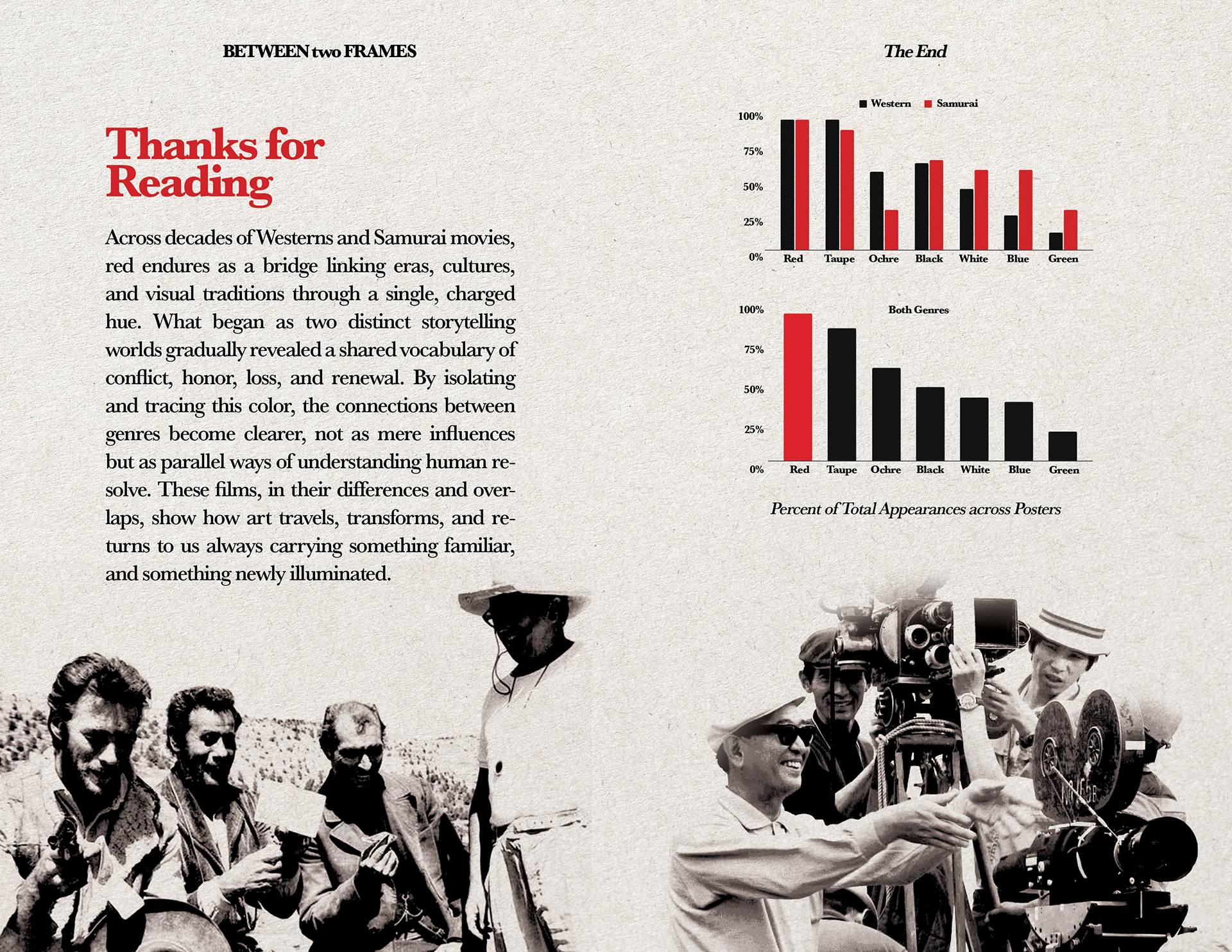
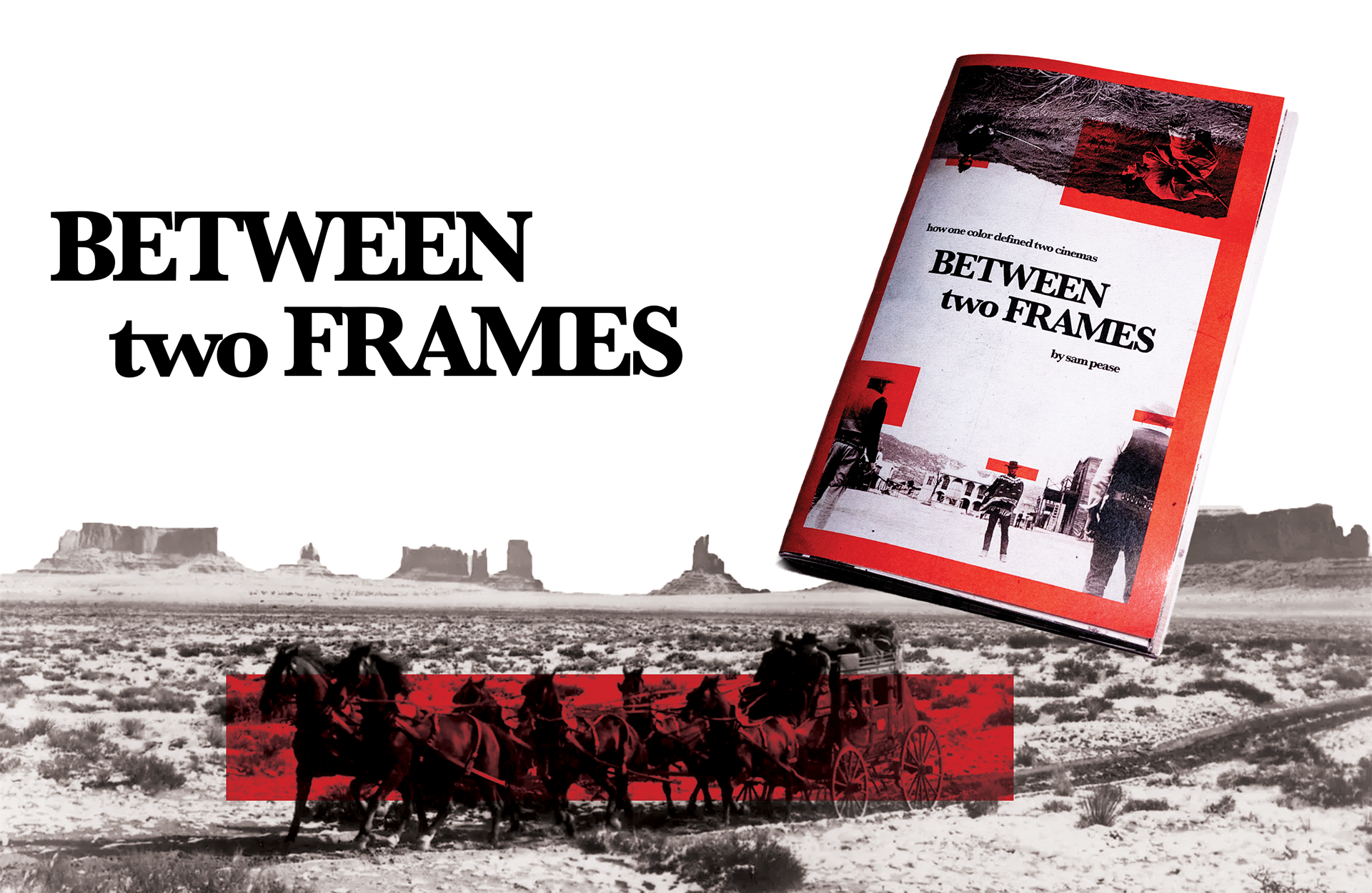
This project was to create a pocket-sized color guide, detailing color usage across media genres. I chose to cover the intertwined genres of Western and Samurai films, specifically focusing on their posters and the history behind them.
Awards
Best of Category in Book Design — 2026 ADAI Annual Design Exhibition
Award of Excellence in Book Design — 2026 ADAI Annual Design Exhibition
Award of Excellence in Book Design — 2026 ADAI Annual Design Exhibition
Studio
Iowa State College of Design
Graphic Design Studio V
Professor Eric Andren
Graphic Design Studio V
Professor Eric Andren
Overview
The Challenge
Over the course of a month, come up with a theme for the booklet, whether it’s record sleeves, video game covers, or movie posters. Do vast amounts of color research of chosen medium, create spreadsheets and charts, and finally come up with a design system for the chosen audience.
The Audience
Because I picked Samurai and Western movies posters, my audience is designers that work in those fields. The two genres are completely intertwined, and have a long and rich history. I wanted to tell a story, the evolution and shared narrative of the two genres, while also giving design guidance. An all-in-one guide.
My Role
My role in this project was to come up with a compelling and useful narrative. To achieve this, I did tons of research on these film industries. I watched the movies, read reviews and interviews with directors. I was already somewhat familiar with the subject, but if I was doing this project, I wanted it to be right. I needed to have an in-depth understanding of what I was making.
Research
The Start
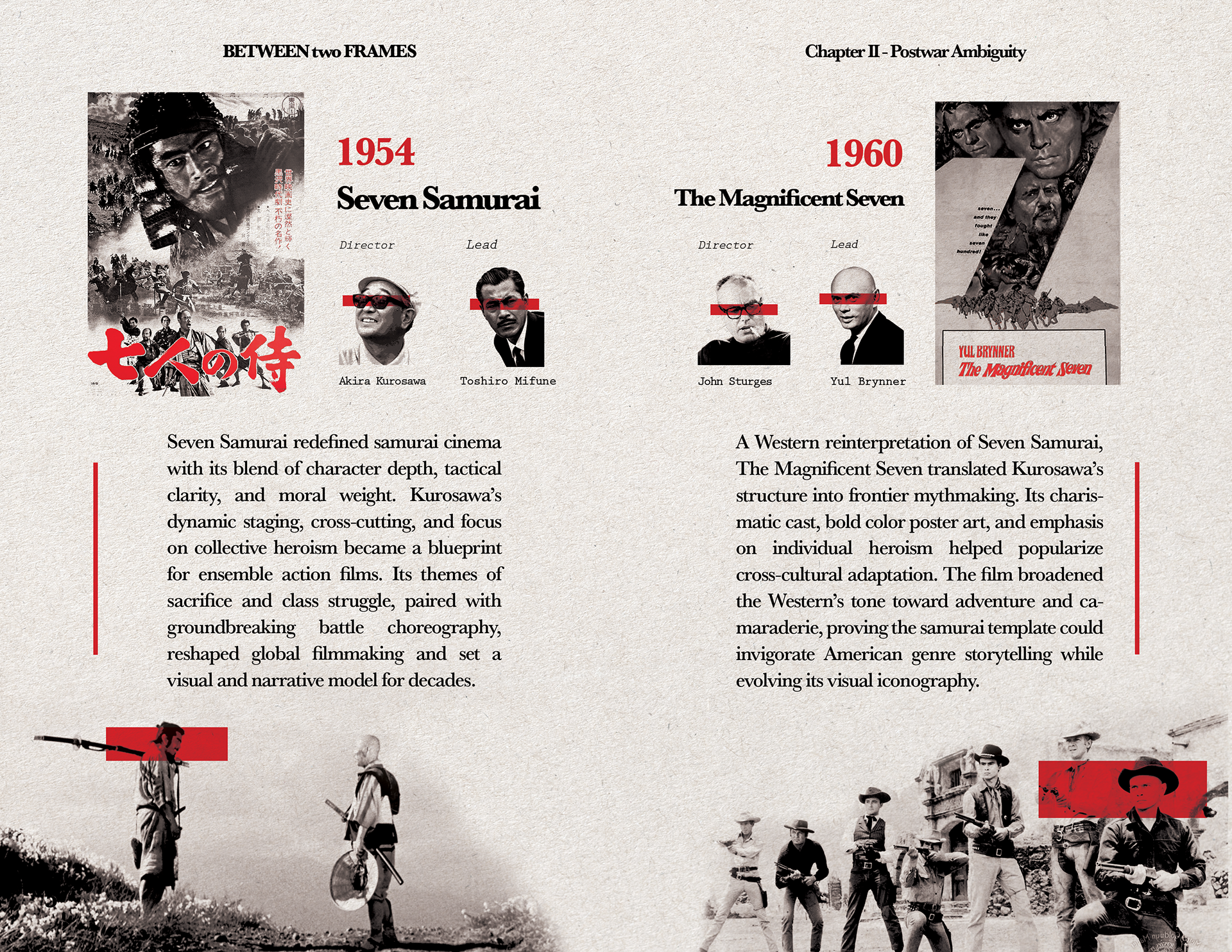
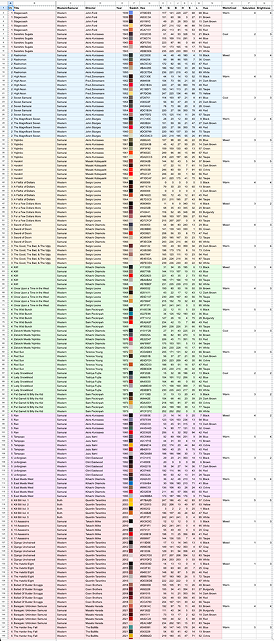
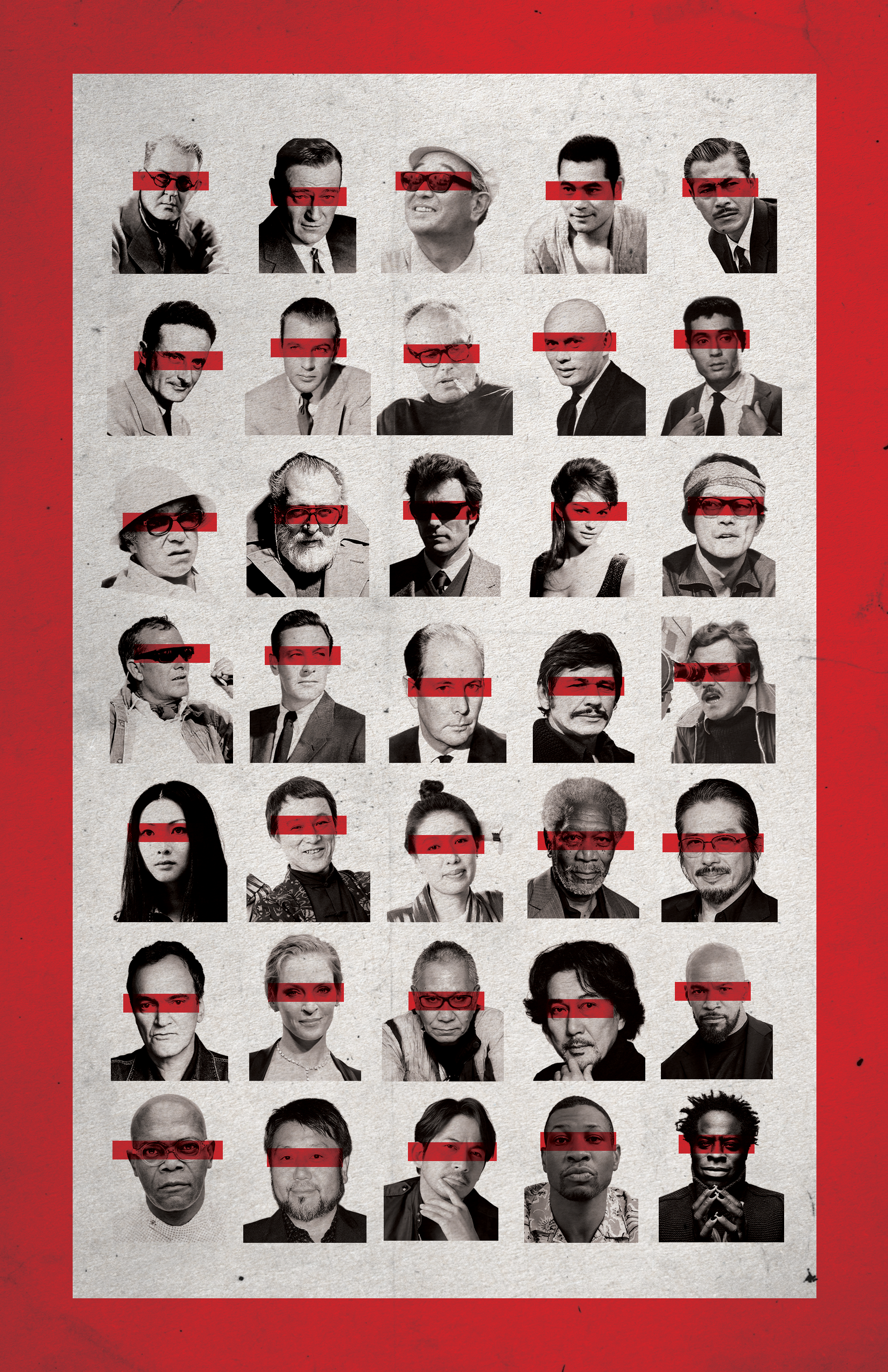
Once I had my goal in mind, it was time to start researching. I had collected all the films I thought were most important for my project, and got to work. I was covering movies from 1939 to 2021, 30 overall. I split them into 6 narrative chapters. So I had my baseline done, now all the research just had to fall into place.
Findings
I grouped films by genre, and I was originally planning to compare one from each directly on each spread. This ended up not working out. It’s hard to nail down which genre one is, especially as time went on and they melded into each other.
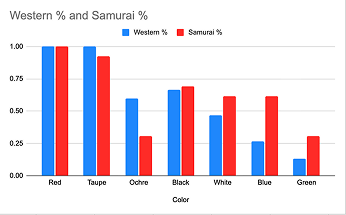
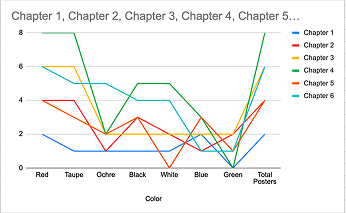
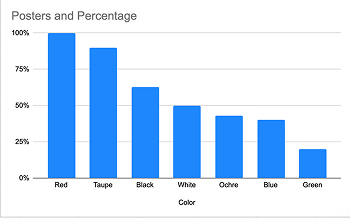
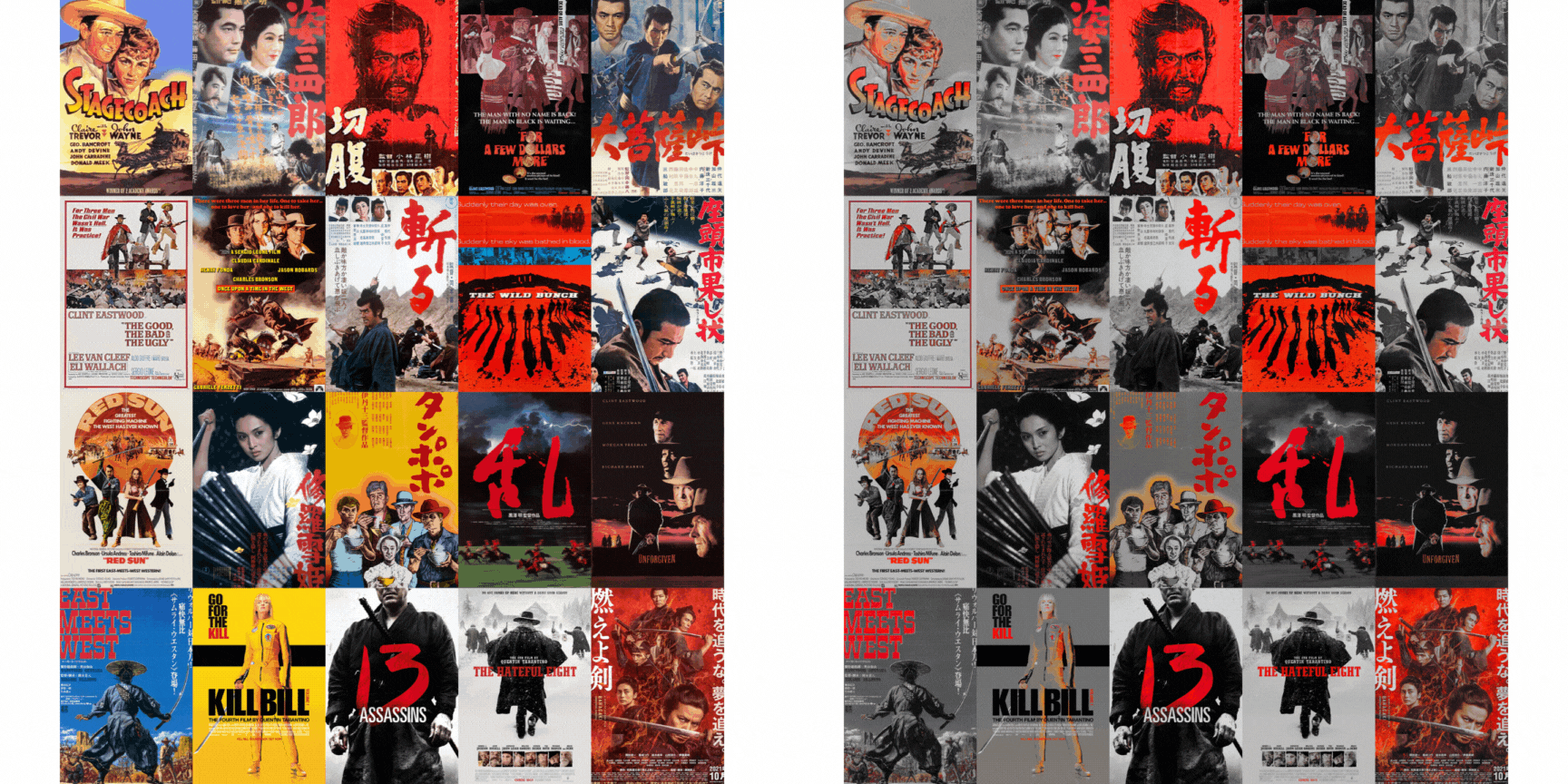
I was kind of flailing at this point, looking for a direction to go. My designs weren’t to my liking, and it didn’t have a strong sense of personality. I took a break, came back, and realized every poster I picked used red prominently.
Process
Early Designs
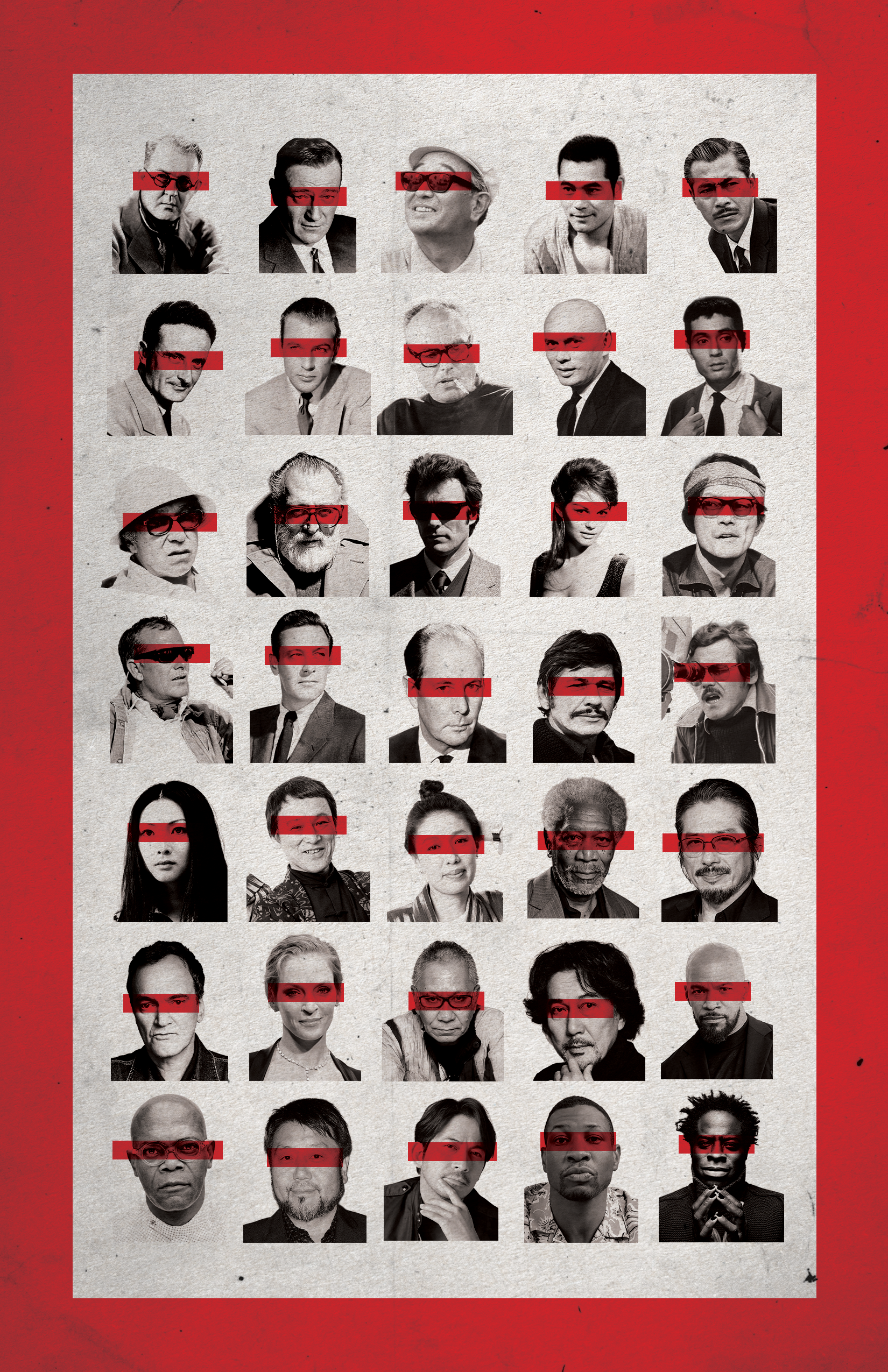
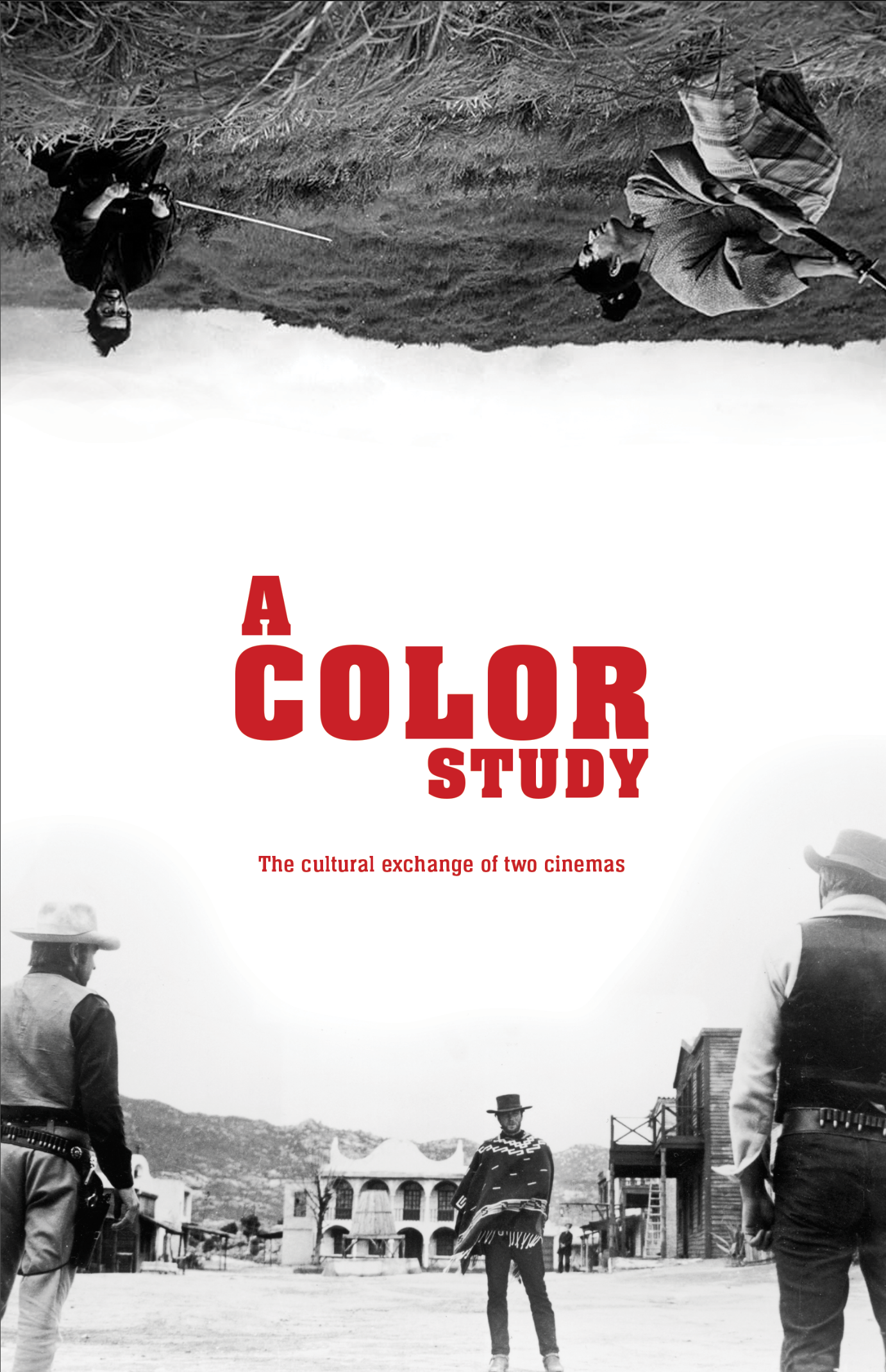
From the moment I picked my topic, I had an idea for the cover in my head. I wanted to show both genres on the cover to let it speak for itself. I went through a bunch of iterations, but none sat right with me.
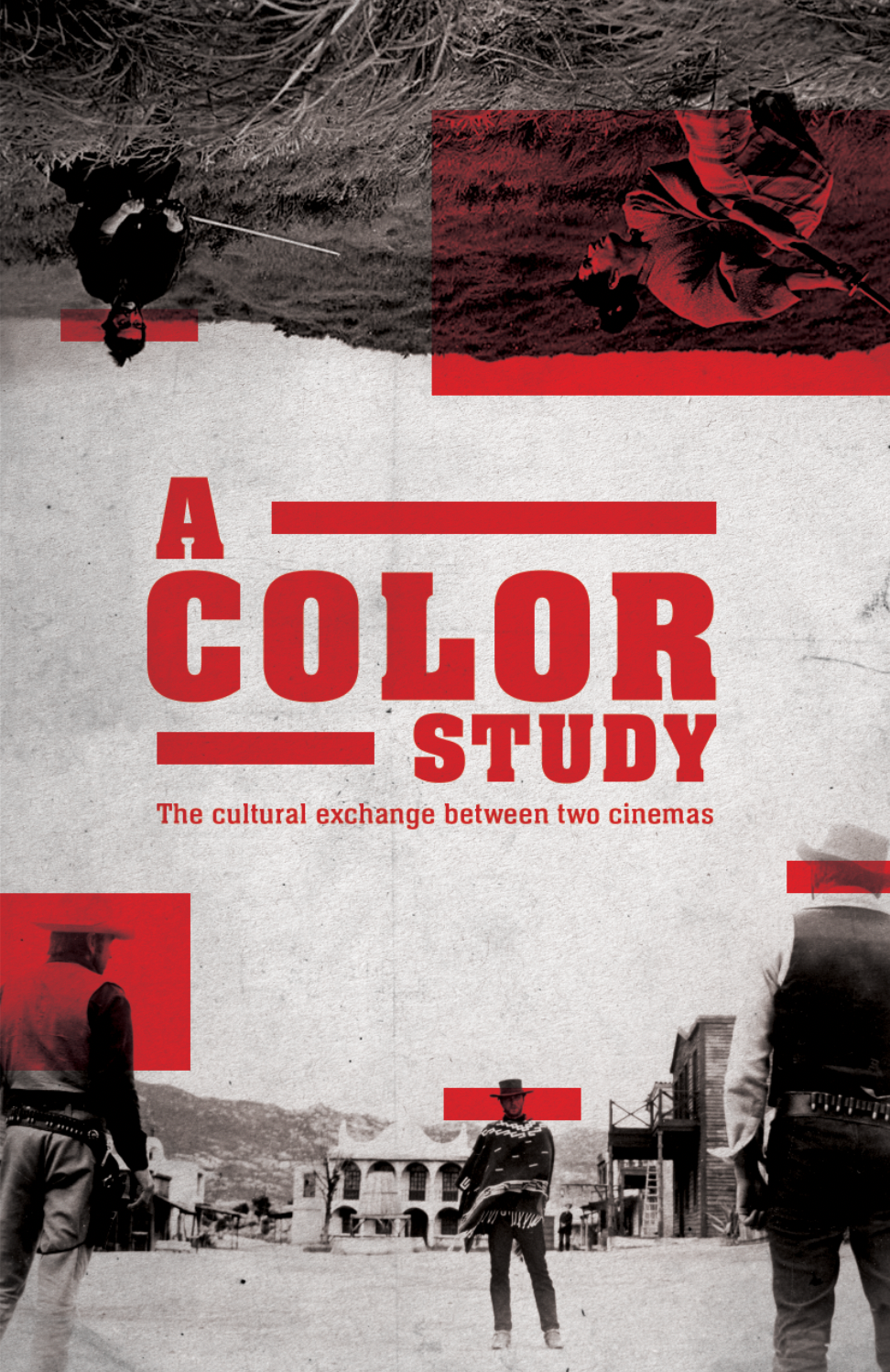
Eventually I threw some texture and red squares on there, and I started to understand the feel I wanted to go for. I figured I’d come back to the cover once I got the interior figured out.
Road Bump
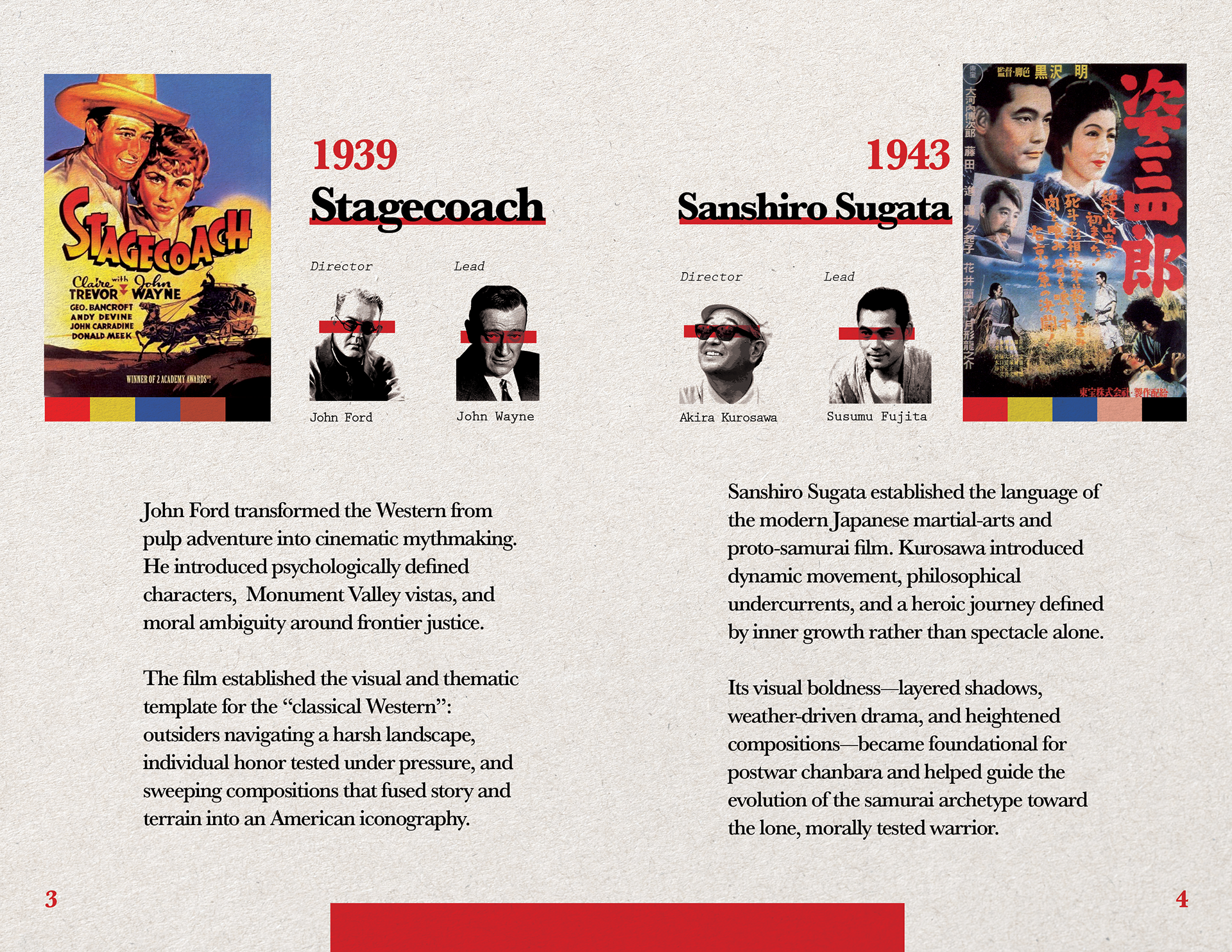
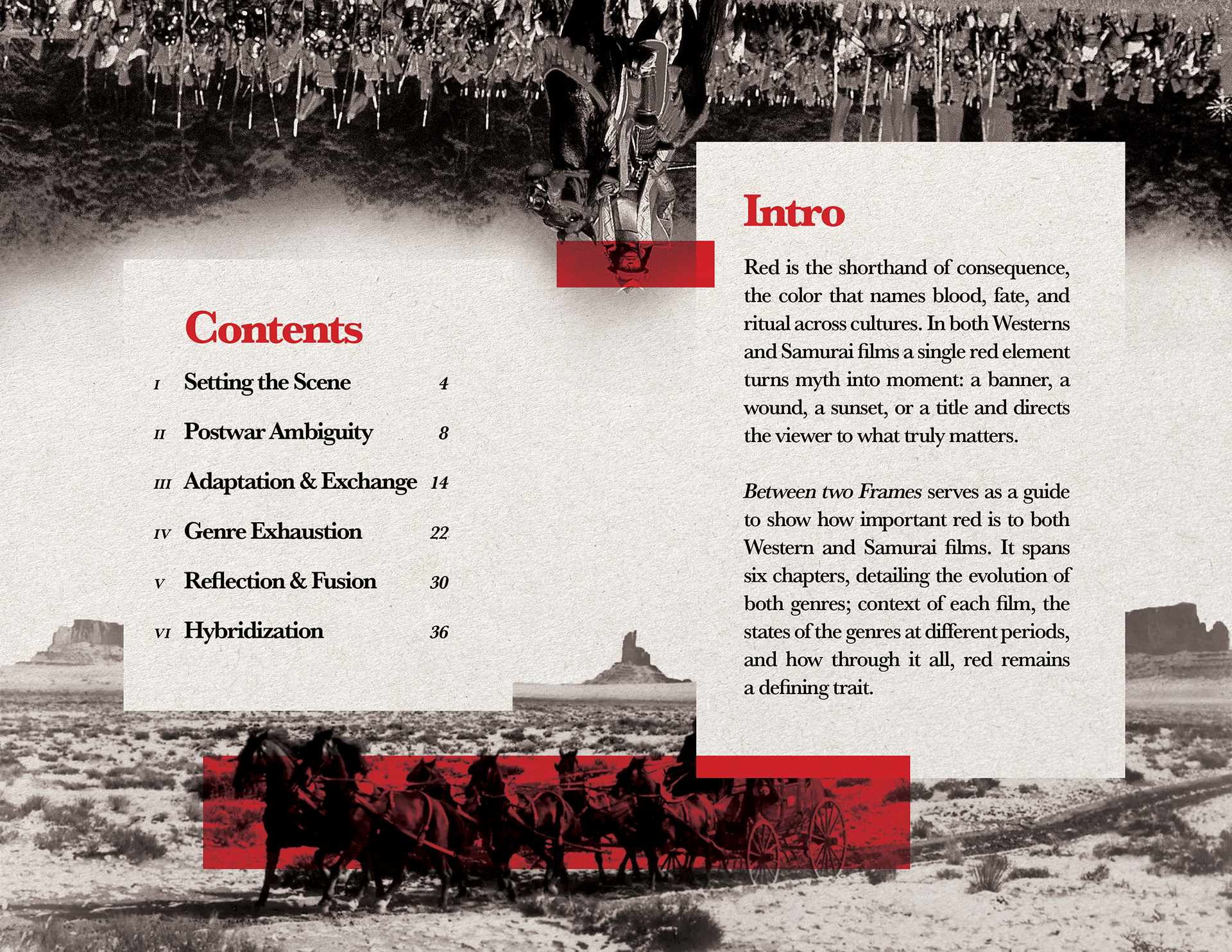
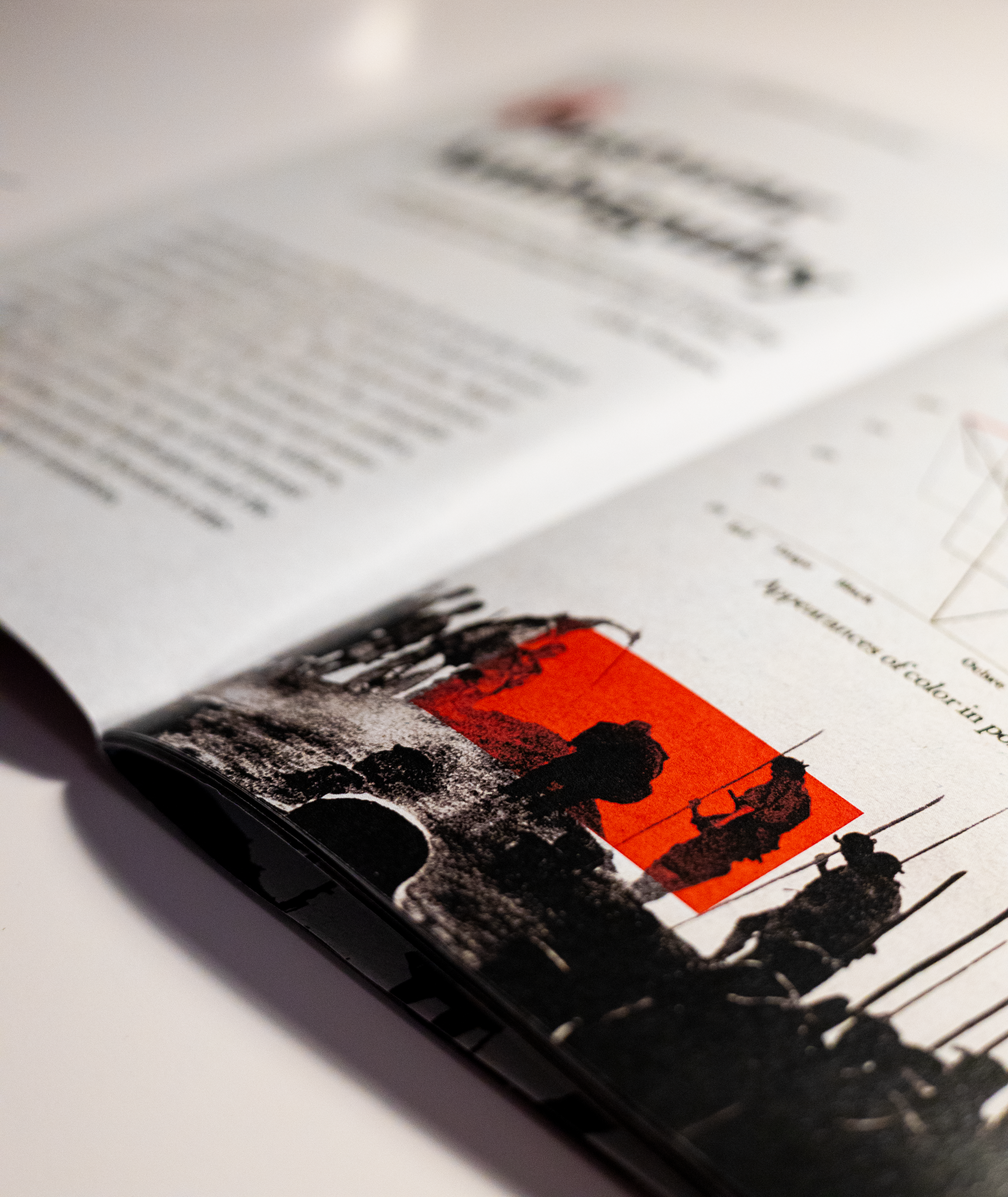
As I began designing spreads, I couldn’t figure them out. I was liking the grayscale imagery with red highlights, but as soon as I threw the posters with color in, it threw off the whole thing.
After taking a break, I came back to it with fresh eyes. Immediately I had an idea. It was a big leap, especially from the original project description, but I asked my professor if I could focus solely on red.
After taking a break, I came back to it with fresh eyes. Immediately I had an idea. It was a big leap, especially from the original project description, but I asked my professor if I could focus solely on red.
Shifting Gears
Eventually, after some deliberation, he agreed. Earlier on in my design career, I wouldn’t have made this jump, but I was confident I could execute it well now.
I designed the intro spread, and was very happy with it. I think this helped convince my professor as well. From here on out, I went pedal to the metal designing out the rest of the booklet.
Solution
Finally Arrived
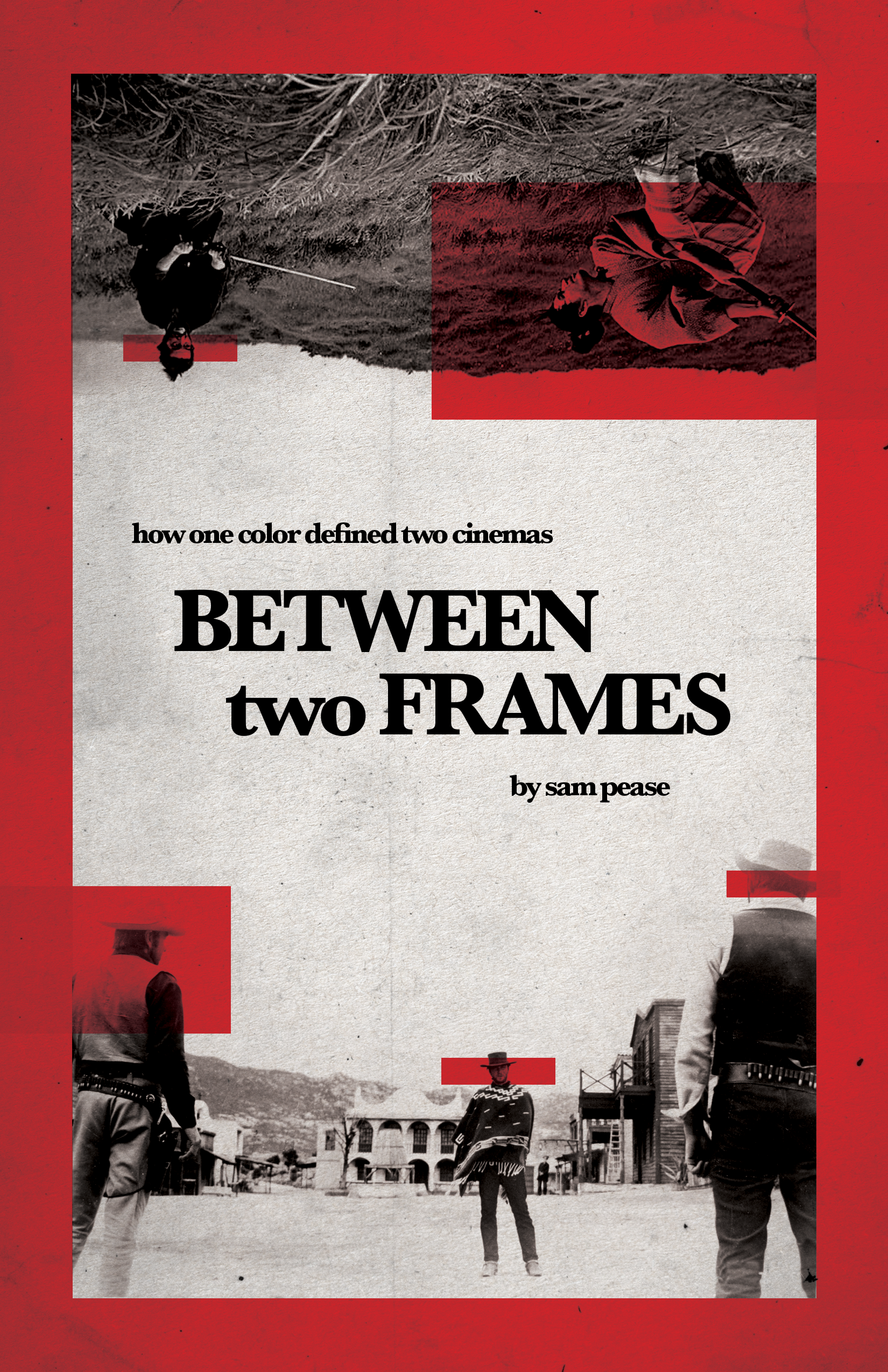
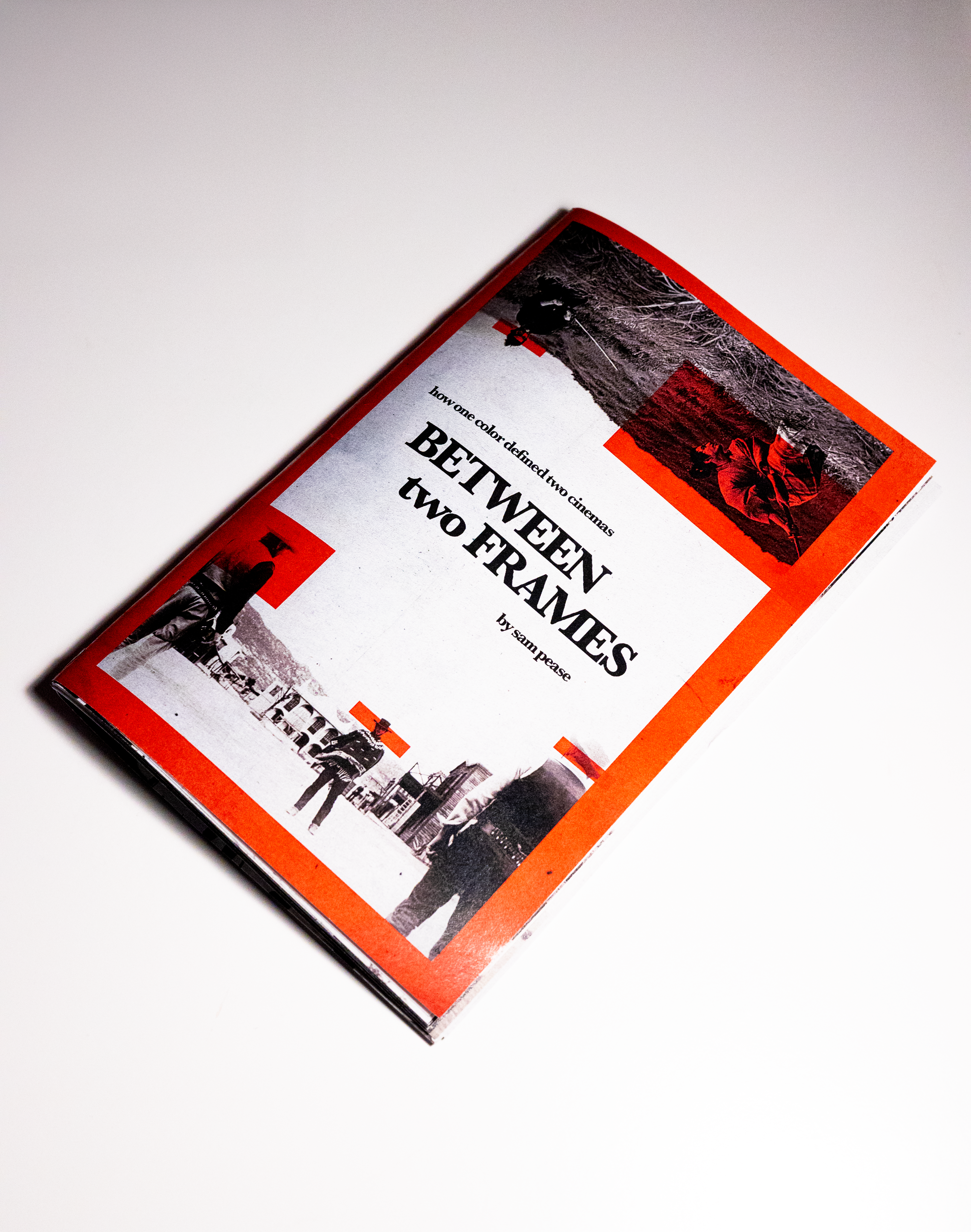
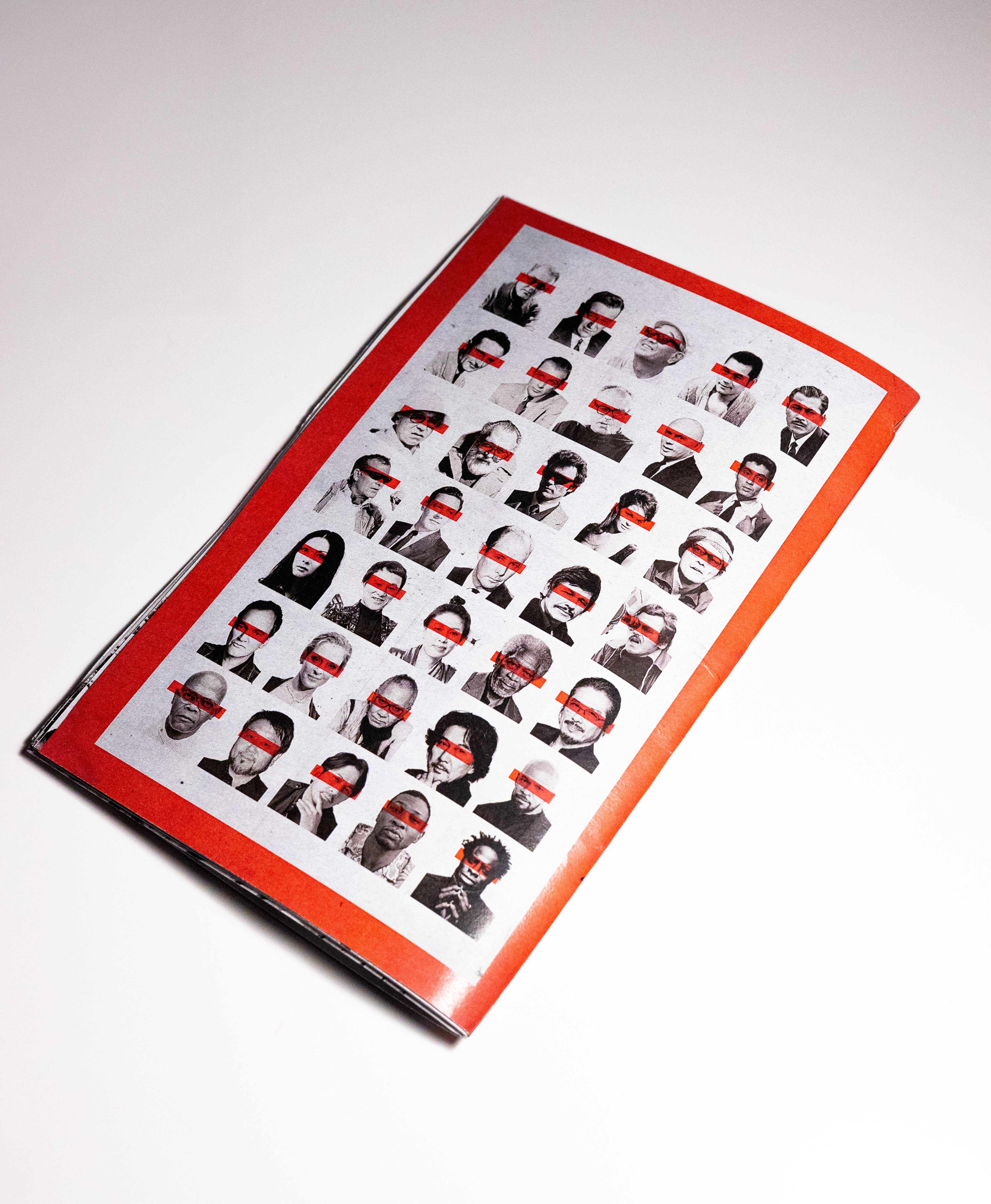
Once I got the interior style figured out, I came back and revised the cover to match. I gave more space to the title, while pushing the red farther by adding the border. I added more texture in the flat designs, however, when printed it will be the natural paper.
Why Red
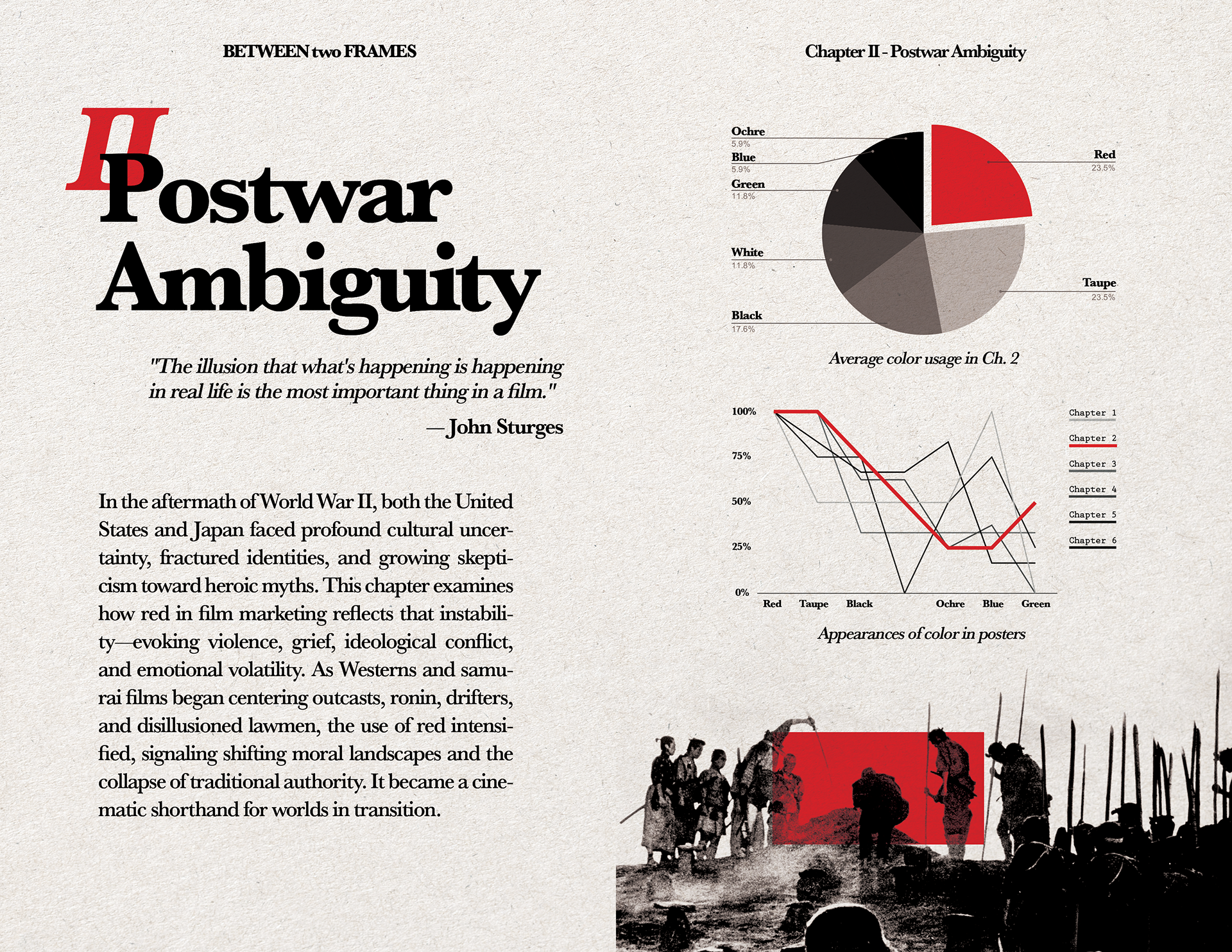
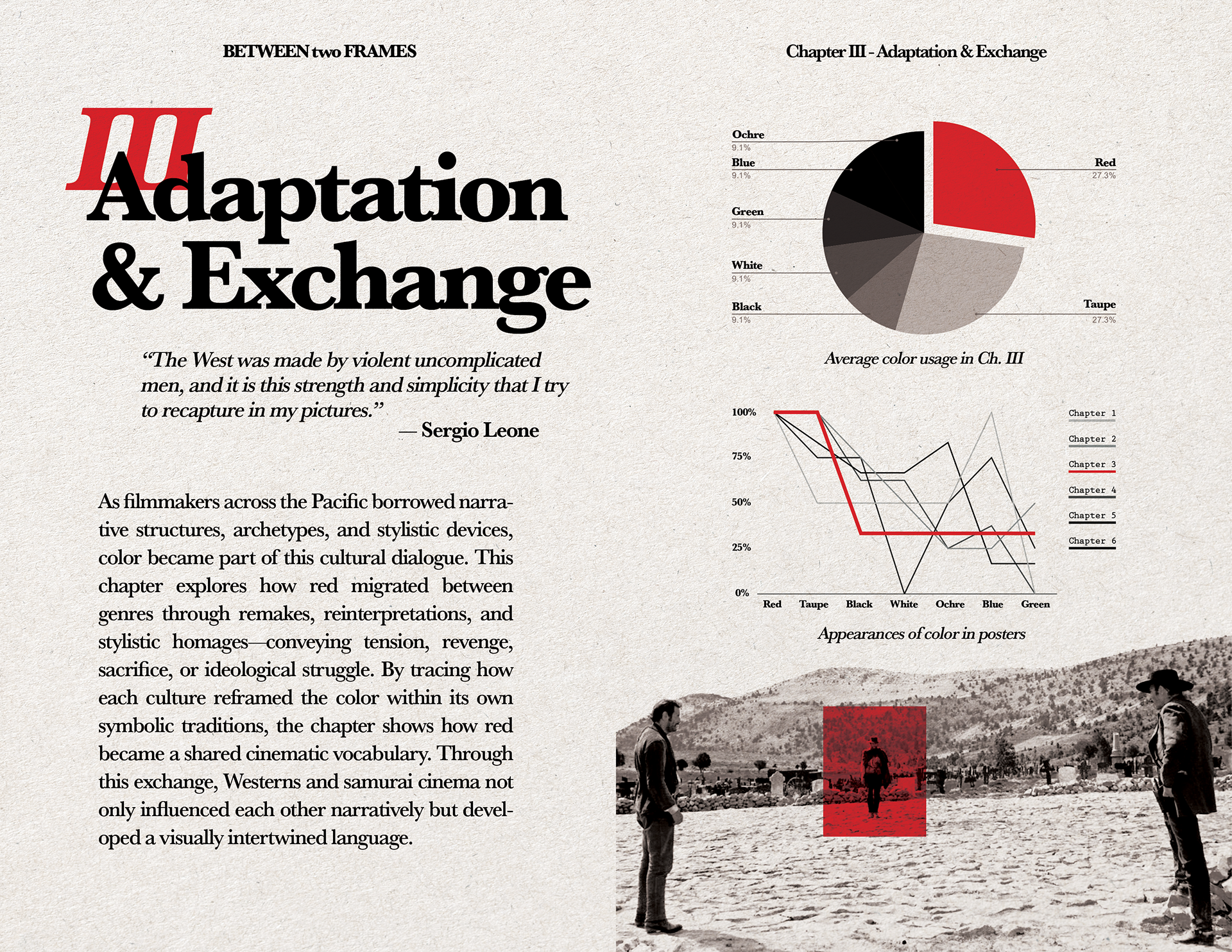
Red has been used by both genres in their posters for close to a century. It’s hard to nail this down to one reason, especially since it holds different meaning across cultures. However, both genres focus on characters with passionate ideals, and they act on it with violence. Red is used to represent both, and thus has become a prominent color in both genres.
Audience Needs
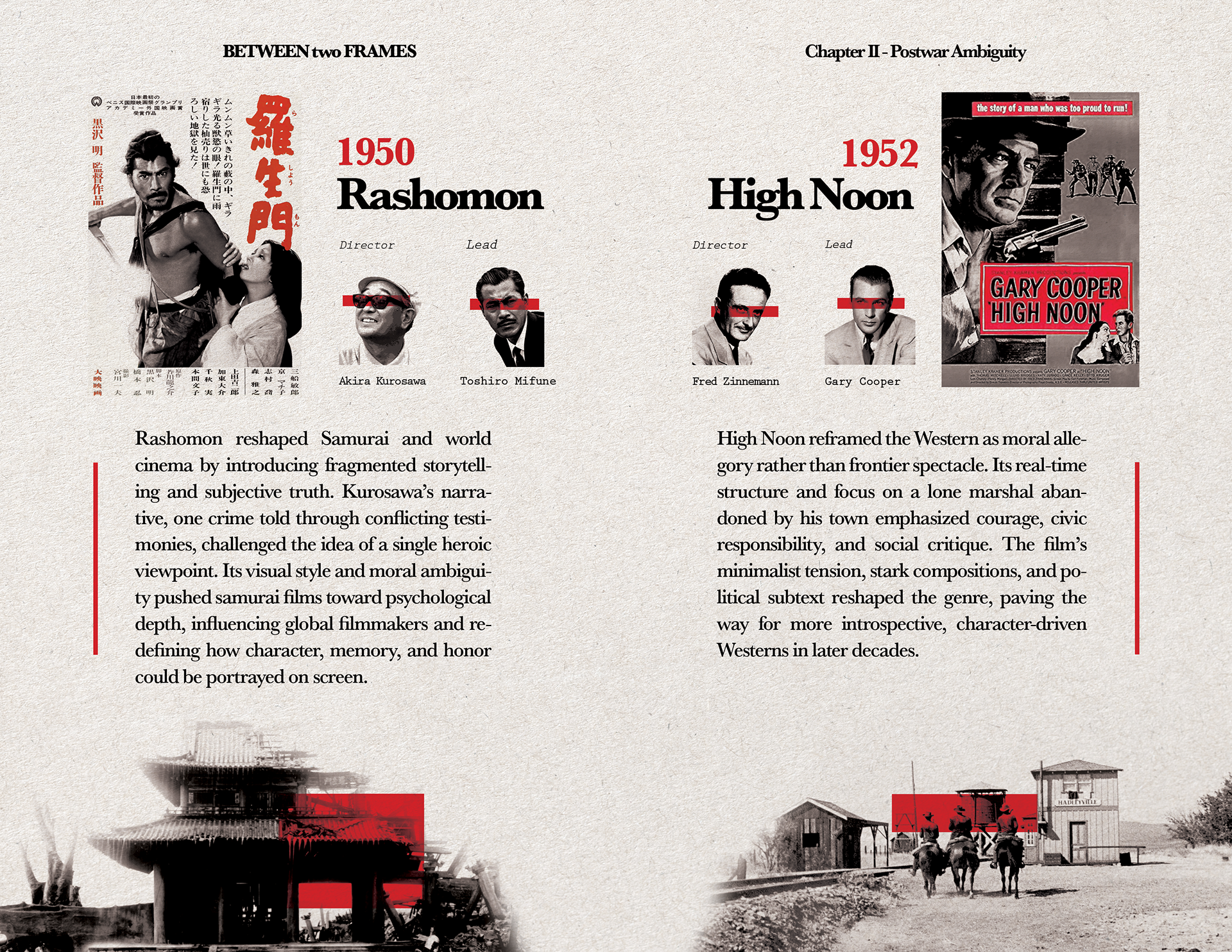
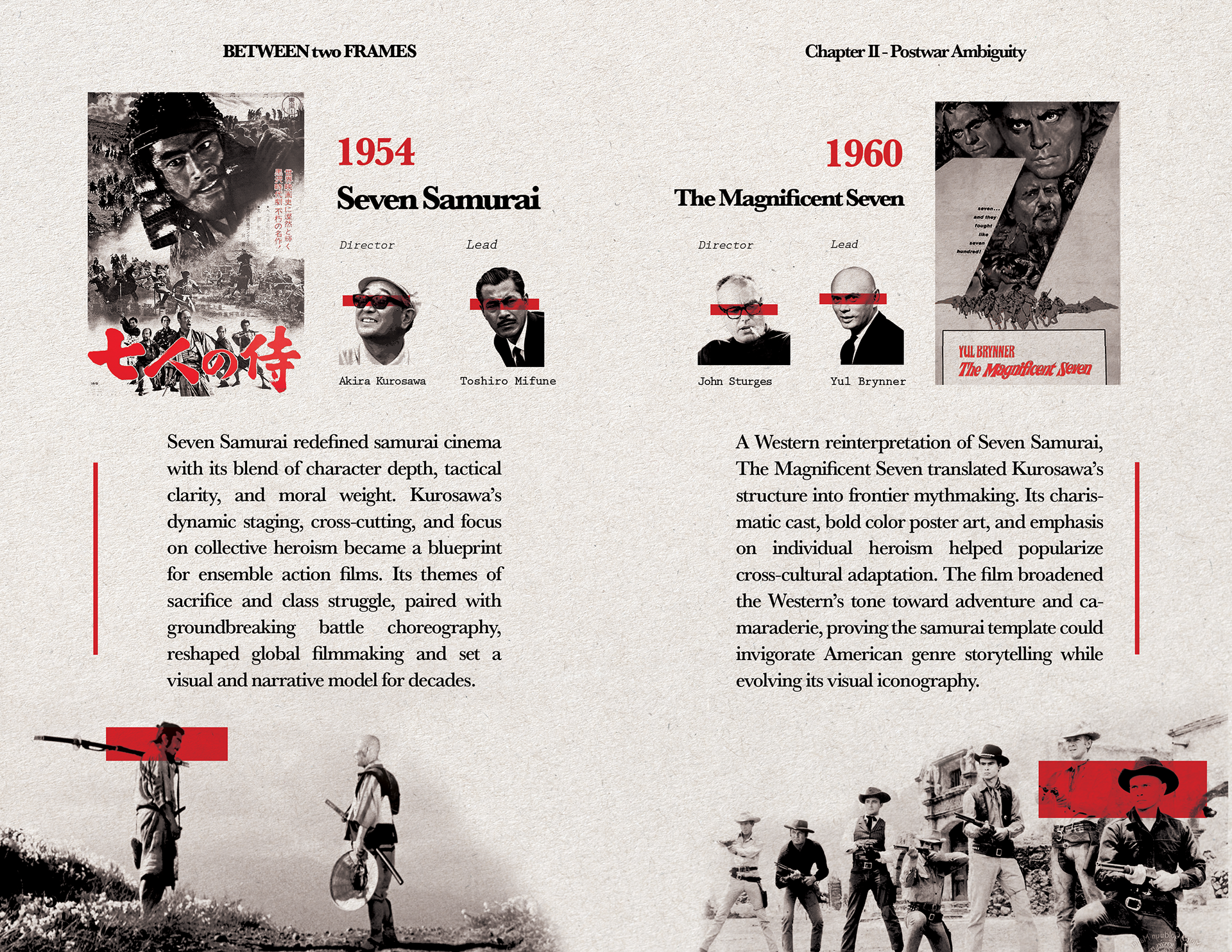
Obviously, a color handbook that uses only red isn’t that useful on its own. But, this book serves as a 46 page history book that designers can quickly digest a century of rich history and designs. It gives story details, overarching genre performance, and shows how intrinsic red is to both genres, backing my findings up with the research done at the beginning.
Impact
Identity
As I talked about earlier, I wouldn’t have made this dramatic of a change earlier in my career. On paper, it completely deviates from the original description, but because of the changes I made will approval from my professor, the project came out a lot stronger and more unique than if I hadn’t.
Narrative
Across the research I did, I didn’t find any stand-out trends or interesting stats across the history of the posters. The only consistent thing I found was how prominently red was used. I tried other solutions, but the one that made the most sense was to focus only on red. It drove the message home harder.
What I Learned
This was the biggest editorial project I’ve worked
on. While I’ve done longer books, the pages were just text, and not as filled with content as this project was. All the pages had to be done in photoshop because of the amount of layer styles and textures, which gave me technical experience. But, more than all, this project gave me the confidence to take bigger creative leaps and trust myself and my process.
Flat Designs